

9 Essential Oils Worth Using in Your Daily Skincare
Last Updated: November 4, 2026
Quick Summary
The best essential oils for daily skincare include lavender, tea tree, bergamot, ylang ylang, and cedarwood, each with a distinct scent and feel. Dilute them into a carrier oil first, starting at 1% or less for the face, and patch test every new oil before regular use.
- Lavender is a soft, floral oil and a good first choice for a gentle daily ritual.
- Keep essential oils at 1% or less for the face and neck, about one drop per teaspoon of carrier oil.
- Patch test every new oil on your forearm or behind your ear, and check at 24 and 48 hours.
- Cold-pressed bergamot may increase sun sensitivity, so avoid UV exposure on treated skin for at least 12 hours.
Table of Contents
- Why Essential Oils Belong in a Simple Daily Routine
- Best Essential Oils for Daily Skincare for Dry Skin
- Individual Oil Profiles and Everyday Uses
- Best Essential Oil for Glowing Skin: What to Expect
- How Essential Oils Should Be Diluted for Skincare
- Patch Testing, Photosensitivity, and Who Should Avoid Oils
- Start Your Simple Ritual With One Oil From Our Collection
- Frequently Asked Questions
Your daily skincare routine can feel like one more thing to manage. Essential oils can make it simpler and more pleasant, with a scent you look forward to and a ritual that takes a minute or two. This guide from Verefina walks through which oils suit a daily routine and how to use them with care.
Why Essential Oils Belong in a Simple Daily Routine
Essential oils are concentrated plant extracts. A few drops go a long way, which is part of why they fit well into a short routine. We think of them as a finishing touch, not a replacement for a gentle cleanser or a good moisturizer.
Many people reach for them for the scent alone. A soft floral or fresh citrus note can turn a quick evening wash into a calm moment. Others like the sense of ritual, pairing a few drops with a carrier oil and a slow massage.
Keep expectations realistic. Essential oils are not a cure for skin concerns, and the research on them is still developing. Research on essential oils for skin is still developing, and it is a long way from a guarantee for everyday skincare. Treat oils as a pleasant addition and watch how your skin responds.
Best Essential Oils for Daily Skincare for Dry Skin
If dryness is your main concern, look to oils that feel soft and comforting once diluted. Lavender is a popular starting point because its gentle floral scent is easy to like. Our Lavender Essential Oil - 15 ml is a classic choice for a simple, calming ritual.

Dilution matters for every skin type. Start with a lower concentration than you think you need. Our Ylang Ylang Essential Oil - 15 ml is rich and heady, so a very small amount goes a long way.
Individual Oil Profiles and Everyday Uses
Here are the oils we see most often in daily routines. Each one has a distinct scent and a different feel, so choose the one that suits your routine.
1. Lavender Essential Oil
Lavender is soft, floral, and easy to like. It is the oil many people try first. Use it in a diluted blend after cleansing, or add a drop or two to your evening wind-down. Our Lavender Essential Oil - 15 ml is a dependable everyday option.
2. Tea Tree Essential Oil
Tea tree has a crisp, clean scent. It is potent, so always dilute it well before any topical use. Our Tea Tree Essential Oil - 15 ml is a bold, clean-smelling oil for diffuser and cleansing rituals when used with care.

3. Bergamot Essential Oil
Bergamot is bright and citrusy with a softly floral finish. It suits daytime rituals when you want something uplifting. Keep one point in mind: cold-pressed bergamot may increase sun sensitivity. Avoid UV exposure on treated skin for at least 12 hours after use. Our Bergamot Essential Oil - 15 ml is a good fit for daytime rituals if you plan your timing carefully.

Here is a quick side-by-side look at the three oils covered in this section, so you can match each one to your routine.
| Oil | Scent and feel | Key note |
|---|---|---|
| Lavender | Soft, floral, easy to like | Good first oil for a gentle ritual |
| Tea Tree | Crisp, clean | Potent; dilute well before topical use |
| Bergamot | Bright, citrusy, softly floral | Cold-pressed may increase sun sensitivity |
Best Essential Oil for Glowing Skin: What to Expect
Many people hope an oil will make their skin look brighter. Scent and ritual can make a routine feel more pleasant, but judge your results over several weeks, not several days.
If you want a warm, grounding scent for evening routines, cedarwood is a steady choice. Our Cedarwood Essential Oil - 15 ml has a dry, woody character. Dilute it properly before applying it to skin.
How Essential Oils Should Be Diluted for Skincare
Dilution is the single most important habit in an essential oil routine. Essential oils are concentrated, and neat application on skin invites irritation. The fix is simple: always mix them into a carrier oil first.
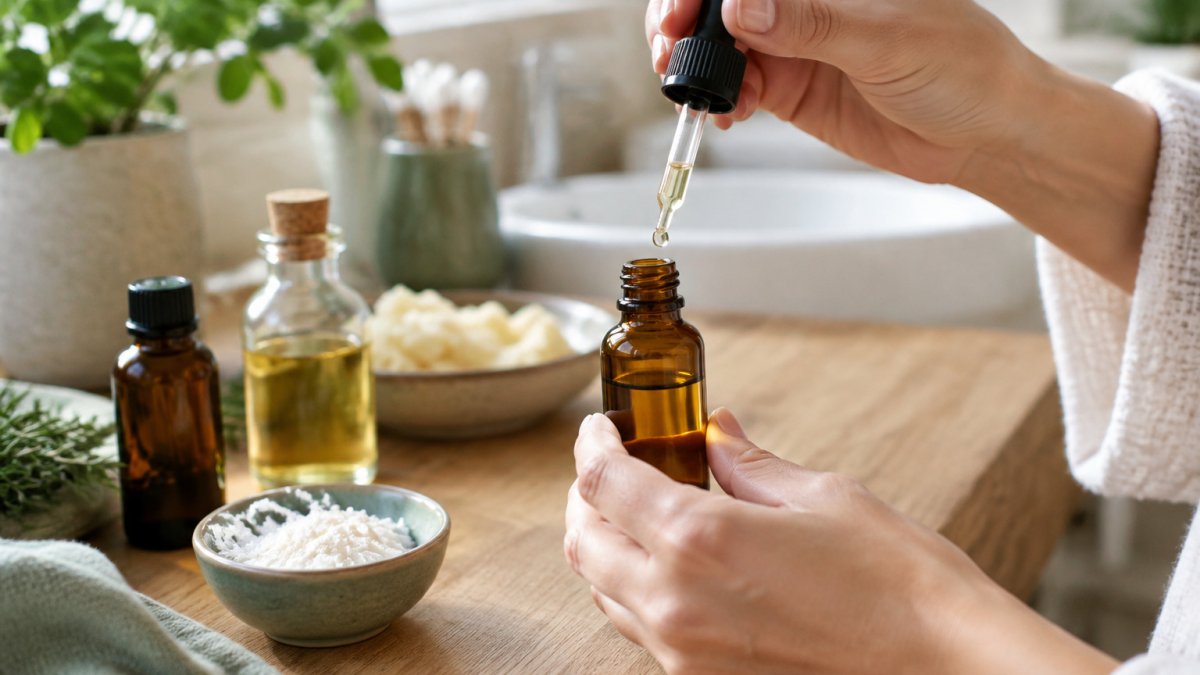
A carrier oil is a plain, skin-friendly oil that spreads the essential oil evenly and slows absorption. Jojoba, sweet almond, and fractionated coconut oil are common choices. They feel lightweight, stay stable for a few weeks in a small bottle, and let you control the strength of your blend.
1. Start with a percentage, not a drop count
Dilution is easiest to think about as a percentage of essential oil in the finished blend. These ranges are commonly used as a starting guide for daily use:
- Face and neck: 1% or less. That is about 6 drops of essential oil per 1 ounce (30 ml) of carrier oil, roughly one drop per teaspoon.
- Body and hands: 1-2%. That is about 6-12 drops per 1 ounce of carrier oil.
- Spot use on small areas: stay at the low end of the body range, and never exceed 2% for everyday skincare.
If you are new to oils, sensitive, or using a potent oil like tea tree or ylang ylang, start at the lowest end and see how your skin feels over a few days.
2. Measure with tools, not estimates
Use a clean glass dropper for the essential oil and a small glass bottle for the blend. A kitchen measuring cup is fine for the carrier oil, but a marked bottle makes repeat batches easier. Write the date and the oils used on a label.
Lavender Essential Oil - 15 ml →
3. Make small batches
Blends lose freshness over time, and a small batch lets you adjust. Mix only what you will use within a few weeks, keep the bottle capped and away from heat and direct light, and start fresh rather than topping off an old blend.
4. Apply to damp or dry skin, but consistently
A few drops of a diluted blend massaged into clean, slightly damp skin feels comfortable and spreads further. Let it settle before layering a moisturizer on top.
Watch out: more is not better. Doubling the drops to get a stronger scent can irritate skin, and the scent does not need to be strong to be pleasant.
If you are building your first blend, our Lavender Essential Oil - 15 ml is a gentle, easy-to-like starting point, and our full essential oils collection lists each oil's aroma and usage notes so you can plan a simple, low-percentage blend.
Patch Testing, Photosensitivity, and Who Should Avoid Oils
A little caution up front makes daily use feel calm instead of risky. Three habits cover most of it: patch test every new oil, respect sun-sensitive oils, and know when to ask a professional first.
1. How to patch test
Patch testing is quick and worth doing for every new oil or blend.
- Mix the oil at the strength you plan to use on skin.
- Apply a small amount, about the size of a pea, to the inside of your forearm or behind your ear.
- Leave it uncovered and avoid washing the area for 24 hours.
- Check the spot at 24 and 48 hours. Some reactions are delayed.
What to look for: redness, itching, stinging, swelling, or a rash. If any of these appear, wash the area with mild soap and water and stop using that oil.
Watch out: a pleasant first few minutes does not rule out a delayed reaction. The 48-hour check matters as much as the first one.
2. Photosensitivity and sun-sensitive oils
Cold-pressed bergamot may increase sun sensitivity, so avoid UV exposure on treated skin for at least 12 hours after use.
A practical rule: keep sun-sensitive oils for evening routines, and plan to stay out of direct sun on treated skin for at least 12 hours. For daytime use, choose oils that do not carry this sun-sensitivity note, and still patch test.
3. Who should be especially careful
Some people should check with a qualified health professional before using essential oils on skin, or skip them altogether:
- Pregnant or nursing: some oils, including clary sage, are best avoided during pregnancy unless a qualified practitioner directs otherwise.
- Children: young skin is thinner and more reactive. Ask a pediatric professional before using any essential oil on a child.
- Eczema, rosacea, or very sensitive skin: a compromised skin barrier is more likely to react. Patch test carefully and keep concentrations low.
- Fragrance allergy: if you have reacted to scented products before, introduce one oil at a time so you can tell what caused it.
- Medication or a medical condition: some oils can interact with medications or affect sensitivity. A pharmacist or doctor can advise.
Keep oils away from eyes and other sensitive areas, keep bottles out of reach of children, and do not ingest essential oils. Stop using any product if irritation develops, and seek medical advice for anything that worries you.
If you are ready to start with a single, well-documented oil, our Lavender Essential Oil - 15 ml is a gentle first choice, and our full essential oils collection makes it easy to compare aromas and usage notes before you build a simple ritual.
Start Your Simple Ritual With One Oil From Our Collection
You do not need a long list of oils to build a routine. Choose one that matches the mood you want, patch test it, and use it consistently for a few weeks. That is enough to learn how your skin responds.
When you are ready, browse the full essential oils collection at Verefina. Our oils are sold as 15 ml bottles, and each product page lists its botanical name, aroma, and usage notes.
Frequently Asked Questions
What is the best essential oil for face skincare?
There is no single best oil for every face, because skin types differ. Lavender is a popular choice for calm, restful routines. Tea tree is better known for a clean, fresh feel and is often used in a more targeted way. Whatever you choose, dilute it in a carrier oil and patch test on your inner arm for a day or two before applying it to your face. Stop using it if redness, itching, or stinging develops.
Can you use essential oils on your face every day?
Some people use diluted essential oils on their skin daily, but daily use is not right for everyone. Use a low dilution, keep the amount small, and watch how your skin responds over several weeks. Avoid the eye area and other sensitive spots. If irritation appears, stop using the oil and consult a qualified professional. Our essential oils are sold for aromatic, topical, and household use, so follow the directions on each label.
Should you patch test an essential oil before using it on your skin?
Yes. A patch test is one of the simplest ways to reduce the chance of a reaction. Mix a small amount of diluted oil with your carrier oil, apply it to a small area of skin such as the inner forearm, and wait at least 24 hours. Redness, itching, or burning means you should not use that oil on your skin. Patch testing does not guarantee that you will never react, but it helps you decide whether a product is suitable for you.
How should essential oils be diluted for skincare?
Essential oils are concentrated, so they should be diluted in a carrier oil before they touch your skin. Many people start with a low dilution and increase slowly only if their skin tolerates the oil well. Use a small number of drops for each teaspoon of carrier oil, and keep the blend away from your eyes and other sensitive areas. Some oils, such as bergamot, may increase sun sensitivity, so avoid UV exposure on treated skin for at least 12 hours after topical use.

