

How to Choose the Best Essential Oil Blends for Home Wellness
Last Updated: November 4, 2026
Quick Summary
The best essential oil blends for home wellness match a scent to a moment: a citrus blend to lift your morning, lavender and cedarwood to wind down at night, or eucalyptus and peppermint to reset stale air. Start with one pre-made blend or three to five drops in a diffuser, and always dilute oils for skin and patch test first.
- A balanced blend pairs a bright top note, a steady middle note, and a quiet base note.
- Use three to five total drops in a diffuser for a standard room, adding one drop at a time.
- Diffuse in short sessions of 15 to 30 minutes in a ventilated room.
- Dilute oils in a carrier oil for skin, patch test 24 hours, and never ingest them.
- Birds and cats are especially sensitive to diffused oils, so let pets leave the room.
Table of Contents
- Why Scent Shapes a Home Wellness Routine
- An Essential Oil Blending Guide for Beginners
- How to Use Essential Oils Safely at Home
- Essential Oil Diffuser Recipes for Calm, Focus, and Fresh Air
- The Best Essential Oil Blends for Home Wellness
- Pet Safety, Sourcing, and What the Evidence Really Says
- Building Your Simple Home Wellness Ritual
- Frequently Asked Questions
Why Scent Shapes a Home Wellness Routine
Scent is closely tied to memory and mood. That is why the best essential oil blends for home wellness can do more than make a room smell nice. They give your day small, repeatable anchors: a citrus lift in the morning, a soft floral hush before bed.
At Verefina, we treat scent as part of a simple ritual, not a medical fix. Consumers are responding. Essential oils and carrier blends hold an estimated 71.4% market share in 2026, according to Future Market Insights aromatherapy market report. Herbaceous and mint oils alone account for 31.2%.
Below, we walk through how to choose a blend, how to use it safely, and which blends suit which moments. A common mistake is buying five bottles before learning how three drops behave in your own diffuser.
An Essential Oil Blending Guide for Beginners
An essential oil blending guide starts with one idea: balance. A good blend has a bright top, a steady middle, and a quiet base. Get that structure right and almost any combination smells intentional.
Top, Middle, and Base Notes
Top notes hit first and fade fast: lemon, bergamot, lime. Middle notes carry the heart of the blend, such as lavender or rosemary. Base notes hold everything down: cedarwood, clove, cinnamon bark.
How Many Drops to Use
Start small. Three to five total drops in a diffuser is enough for a standard room. Add one drop at a time rather than pouring. You can always add; you cannot subtract.
How to Use Essential Oils Safely at Home
Safety is the part most pretty recipe posts skip. Essential oils are concentrated plant extracts, and concentration is exactly why they need care. A thoughtful routine is not about fear. It is about knowing the numbers, the methods, and the limits.
Dilution Ratios That Actually Mean Something
For skin, always dilute essential oils in a carrier oil such as jojoba, sweet almond, or fractionated coconut oil. As a general safety guideline, many people use a lower dilution for everyday body use and an even gentler one for the face or for children. Check with a qualified practitioner for specific ratios.
Patch test first. Apply a small amount to your inner forearm, wait 24 hours, and stop using anything that irritates. If redness, itching, or burning develops, wash the area with carrier oil, not water, and discontinue use.
Method-by-Method Safety Notes
- Diffuser: Run short sessions, generally 15 to 30 minutes at a time, in a ventilated room. Start with a few drops and adjust to your room.
- Topical: Dilute, patch test, and avoid broken skin. Citrus oils can make skin more sensitive to sunlight, so keep treated areas covered or out of direct sun.
- Inhaler or tissue: A drop or two on a tissue is a simple, low-risk way to enjoy a scent without running a diffuser.
- Never ingest: Do not swallow essential oils unless a qualified healthcare provider has directed you to.
Watch out: diffusing in a closed, small room for hours can overwhelm the air and your senses. Short sessions beat long ones, and a cracked window helps.
Reading Labels and Buying with Confidence
Because essential oil labels are not always tightly regulated, buy from brands that list ingredients clearly, including the plant's botanical name. Look for "100% essential oil" rather than "fragrance" or "perfume" on the label. Store bottles tightly capped, away from heat and light, and out of reach of children and pets.
If you are setting up a diffuser routine, browse diffusers to find a size that fits your space.
Essential Oil Diffuser Recipes for Calm, Focus, and Fresh Air
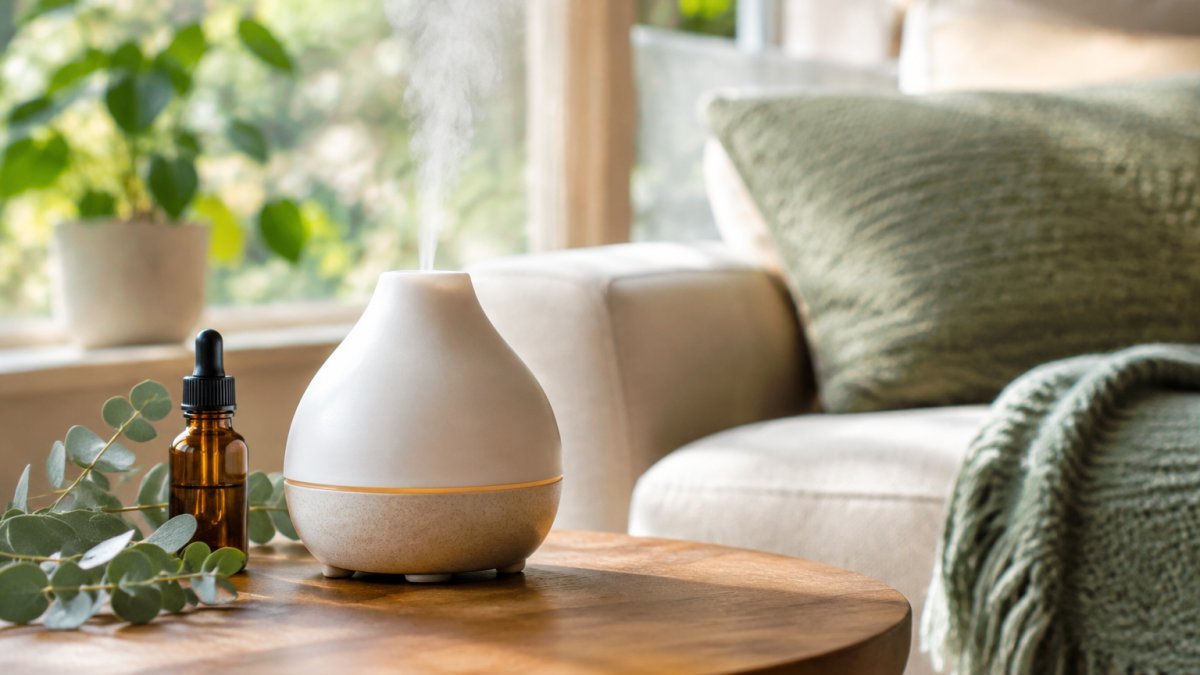
Three simple diffuser combinations can cover many everyday moments.
TRUVY By Nature truDEFENSE Essential Oil Blend — 15 mL →
- Calm evening: 3 drops lavender, 1 drop cedarwood.
- Focus morning: 2 drops bergamot, 2 drops lemon.
- Fresh air reset: 2 drops eucalyptus, 2 drops peppermint, 1 drop tea tree.
For the calm blend, a single bottle of lavender essential oil is all you need to start. Building the fresh-air recipe? Add a bright citrus note with lemon essential oil.


The Best Essential Oil Blends for Home Wellness
Pre-made blends save you the guesswork, and they are blended to smell finished rather than flat. But before you buy, it helps to know what you are choosing between: a ready-made blend or a small set of single oils you mix yourself.
DIY Versus Pre-Made: A Simple Cost-Benefit View
Single oils are flexible. One bottle of lavender can go into a calm blend or a diluted skin blend. The trade-off is that building a balanced blend takes trial, and a mismatched combination can smell muddy. Pre-made blends cost more per bottle but are blended to deliver a finished scent.
A practical middle path: start with one pre-made blend for the moment you care about most, then add single oils as you learn what you reach for. That keeps your shelf small and your spending intentional.
How Our Blends Compare
| Blend | Aroma | Best Moment | Price |
|---|---|---|---|
| truDEFENSE | Warm, spicy-citrus | Seasonal shifts, cozy evenings | $17.99 |
| Clear | Crisp, cooling eucalyptus | Stale-air days, focus | $12.99 |
| Pure | Fresh citrus-herbal | Everyday freshness | $12.99 |
| Immunity | Warm, spicy, citrus-bright | Back-to-school weeks, travel | $29.00 |
| Breathe Easy | Cooling, herbaceous | Heavy-air days | $24.00 |
Choosing by Moment, Not by Hype
A warm clove-and-citrus option is truDEFENSE, which can be used in a diffuser or properly diluted for topical use. If you want to explore the full range, browse the aromatherapy blends collection.
Pet Safety, Sourcing, and What the Evidence Really Says
Two honest cautions belong in any guide to essential oil blends. First, pets: birds and cats are especially sensitive to diffused oils, so diffuse in a room your pet can leave. Second, evidence.
The American Lung Association's guidance on essential oils cautions that essential oils can affect cardiopulmonary health and indoor air quality. Some research is promising, such as NCBI research on rosemary oil compounds, but traditional use is not the same as proven treatment. Our products are not intended to diagnose, treat, cure, or prevent disease.
Sourcing matters too. Because labels are not federally regulated, learn to read them. Our guide on how to read skincare ingredient labels walks through it step by step.
Building Your Simple Home Wellness Ritual
Start with one blend, one diffuser, and one time of day. Morning citrus, evening lavender, a fresh reset when the air feels stale. A simple routine is easier to keep.
Verefina offers full-strength blends and single oils, each listed with its ingredients and directions. Try one, patch test, and adjust from there.
Frequently Asked Questions
What are the best essential oil blends for making my house smell good?
Citrus-forward blends are the easiest place to start. A fresh mix of lemon, orange, and a little tea tree keeps a room feeling light and clean, while a few drops of cedarwood or ylang ylang add warmth for evenings. Verefina's TRUVY By Nature Pure Essential Oil Blend combines citronella, tea tree, coriander, lemon, cypress, orange, and lime essential oils. Add several drops to diffuser water as desired.
How do I use essential oils safely around kids and pets?
Keep bottles out of reach, diffuse in a well-ventilated room, and never apply oils undiluted to skin. For children, use shorter diffusion sessions and lower drop counts, and patch test any diluted blend on a small area first. Some oils may be unsafe around cats and dogs, so check with your veterinarian before diffusing near pets or consider skipping diffusion in rooms they use. Stop use if anyone develops irritation.
Which essential oils blend well with each other?
A simple rule is to pair by aroma family. Citrus oils like bergamot and lemon lift floral notes such as lavender and ylang ylang. Herbaceous oils like rosemary and peppermint sit well with eucalyptus and tea tree. Woody notes like cedarwood can add depth beneath lighter top notes. Try picking one top note, one middle note, and one base note, then adjust until the scent feels balanced to you.
Is it cheaper to make my own blends or buy pre-made ones?
It depends on how many single oils you want to keep on hand. Building blends yourself gives you control over the ratio and lets you reuse the same bottles for years, but buying five or six singles adds up quickly. A pre-made blend like Verefina's Breathe Easy at $24.00 or the Immunity blend at $29.00 gives you a finished combination in one 15 ml bottle. Some people use one or two pre-made blends for everyday use and a few singles for experimenting.
Ready to build a scent ritual that fits your home? Get started with Verefina and choose a blend that suits your space and your day.

