

What's the Best Skincare for Rosacea-Prone Skin?
Last Updated: October 29, 2026
Quick Summary
The best skincare for rosacea-prone skin keeps routines short: a creamy non-sudsing cleanser, a soothing moisturizer with aloe and calendula, and a essential oils for scent and are mineral sunscreen. Our picks are the Lemon Coconut Cleanser, $29, Sea Buckthorn Facial Cream, $45, and Zinc + Tallow Sunbutter, $29. Patch test one new product at a time and stop at the first sign of stinging.
- Score products on gentle cleansing, soothing botanicals, mineral sun care, and simplicity.
- Apply about a nickel-sized amount of sunscreen to face and neck, reapplying every two hours outdoors.
- Patch test behind the ear or inner forearm for 24 to 48 hours before full-face use.
- Three morning steps and two evening steps are enough for most reactive routines.
- Choose essential oils for scent and are over unscented, since unscented products can still contain masking fragrance.
Table of Contents
- What Rosacea-Prone Skin Actually Needs
- How We Chose: Our Product-Selection Method
- The Gentle Face Wash for Sensitive Skin We Reach For
- The Best Moisturizer for Rosacea-Prone Skin in Our Lineup
- Sunscreen for Rosacea-Prone Skin: What to Look For
- How to Patch Test Skincare Products Before You Commit
- A Simple Morning and Evening Routine
- When Skincare Is Not Enough
- Frequently Asked Questions
What Rosacea-Prone Skin Actually Needs
Rosacea-prone skin is skin that flushes, stings, or reacts easily to products and heat, and it usually needs fewer steps, not more (Rosacea Skin Care & Cosmetics). That second number is the one that should shape your shopping list. At Verefina, we build thoughtfully formulated care for everyday routines, and this review walks through what we reach for, why, and how to test anything new before it touches your whole face.
Symptom differences that change your product choices
Rosacea shows up differently from person to person, and the subtype changes what you buy. If your main issue is flushing and visible redness, soothing and barrier support matter most. If you get papules or pustules, keep the routine simple and avoid anything that feels occlusive or heavy. If your eyes sting or water, treat eye-area products with extra care and ask a doctor. If your skin stings on contact, strip the routine down to a mild cleanser and one moisturizer.
A common mistake is buying a full "sensitive skin" line at once. If something irritates you, you will not know which product caused it.
How We Chose: Our Product-Selection Method
We scored each product against four practical criteria, not marketing claims. First, does it clean or moisturize without a tight, stripped feeling? Second, does the formula lean on soothing botanicals like aloe and calendula rather than strong actives? Third, can we describe exactly what is in it and why? Fourth, does it fit a simple routine someone will actually keep up?
| Criterion | What We Look For | Why It Matters |
|---|---|---|
| Cleansing | Creamy, non-sudsing, no tight finish | Stripping worsens reactivity |
| Moisture | Aloe, calendula, gentle oils | Supports the skin barrier |
| Sun care | Mineral filters, zinc oxide | Fewer irritant unknowns |
| Simplicity | Few steps, clear labels | Easier to spot a trigger |
One honest limitation: no product works for every reactive face. Patch test first, always.
The Gentle Face Wash for Sensitive Skin We Reach For
Our pick is the Lemon Coconut Cleanser, $29. It is creamy and non-sudsing, with rounded jojoba beads that polish gently, plus coconut and apricot kernel oils to cushion the skin. Aloe and glycerin add lightweight hydration.

If you want the deeper criteria first, read our guide on what to look for in a gentle face wash for sensitive skin.
Best for: daily cleansing on reactive, easily stripped skin. Skip if: you prefer a foaming lather.
The Best Moisturizer for Rosacea-Prone Skin in Our Lineup
Our choice for a rich daily moisturizer is the Sea Buckthorn Facial Cream, $45. It pairs aloe, shea butter, calendula, sea buckthorn seed oil, and pomegranate extract in a rich, concentrated cream. Calendula is a gentle botanical traditionally used to care for delicate-feeling skin. Use a small amount morning or night.

A lighter option for daytime
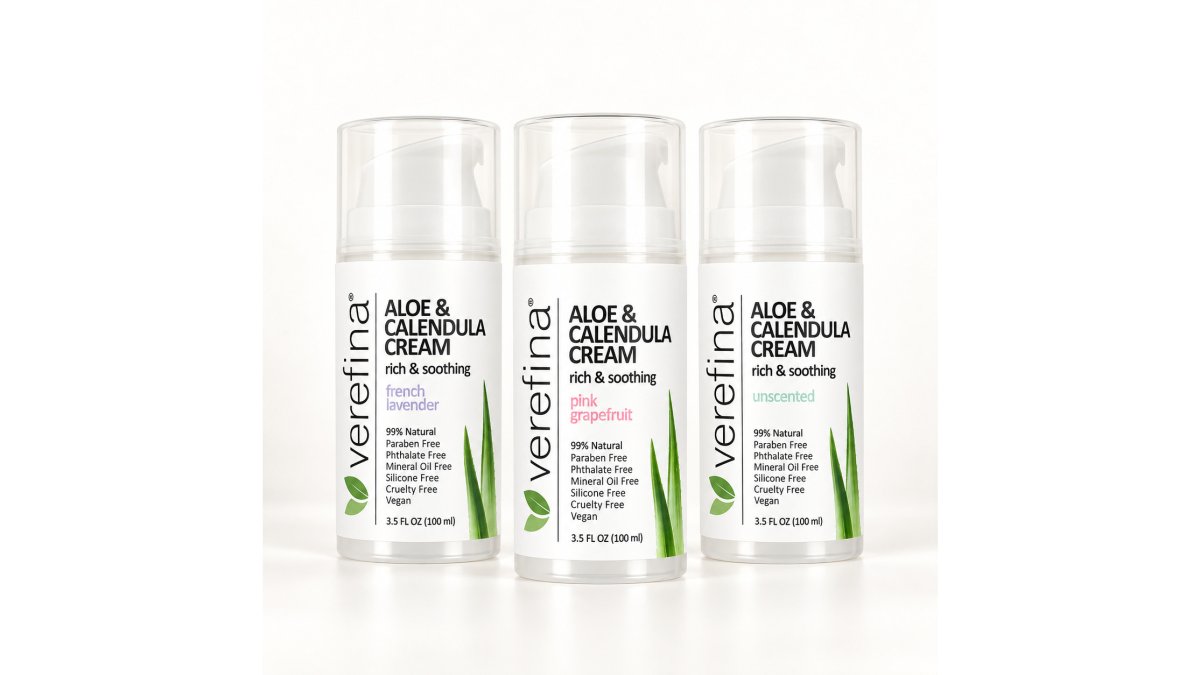
If a rich cream feels like too much under makeup, the Aloe Vera + Calendula Cream, $20, is a good middle ground. It comes unscented, and works on face, hands, and body.

Sunscreen for Rosacea-Prone Skin: What to Look For
Sun is one of the most common everyday triggers for flushing and visible redness, so sun care is not an optional step in a reactive routine (Coping With Rosacea). The goal is simple: block UV with filters that are less likely to sting, skip added fragrance, and make the product comfortable enough that you actually wear it every day.
Why mineral filters are the gentler starting point
A practical note on labels: the American Academy of Dermatology advises choosing essential oils for scent and are over unscented, because "unscented" can still contain masking fragrance. Fragrance is one of the most common cosmetic irritants, so read the ingredient list rather than trusting the front of the bottle.
How much to apply, and when
Most people apply far less sunscreen than the label assumes, which means they get far less protection than they think. A common guideline is about a nickel-sized amount for the face and neck, applied as the last step of your morning routine. Reapply every two hours if you are outside, and sooner if you are sweating or toweling off (the American Academy of Dermatology).
For reactive skin, the order matters less than consistency. Cleanse gently, moisturize, then apply sunscreen. If your skin feels tight or hot after sunscreen, that is a signal to stop and reassess rather than push through.
Our mineral option is the Zinc + Tallow Sunbutter, $29, made with 20% non-nano micronized zinc oxide in a rich tallow and monoi base. It is softly tinted and rubs in with minimal cast. Pair it with shade, hats, and timing outdoors, and patch test on your jaw before your first full-face application.
What to skip
- Added fragrance and essential-oil-heavy formulas, which can sting reactive skin
- High-alcohol sprays that feel cooling but drying
- Exfoliating or "glow" sunscreens with acids or retinoids, which add irritation on top of UV exposure
If your eyes water or sting in the sun, treat that as a reason to talk with a doctor rather than simply switching products.
How to Patch Test Skincare Products Before You Commit
Patch testing is applying a small amount of a new product to a limited area and watching for a reaction before using it on your whole face. Apply a thin layer behind your ear or on your inner forearm, leave it 24 to 48 hours, and check for stinging, redness, or bumps. If nothing happens, try a small patch on your jaw for a few days.
Stop using anything that burns or irritates, and speak with a doctor about persistent reactions. Before you buy, learn to scan labels with our step-by-step guide on how to read skincare ingredient labels.
- Test one new product at a time
- Wait 24 to 48 hours before judging
- Keep a note of what you used
- Stop at the first sign of stinging
A Simple Morning and Evening Routine
A routine for reactive skin should feel like a short, calm ritual, not a shelf full of half-used bottles. The point is to cleanse without stripping, support the barrier with moisture, and protect against sun, then stop. Fewer steps make it easier to spot what helps and what triggers you.
The morning: three steps, in this order
- Cleanse gently. Use lukewarm water, not hot. A creamy, non-sudsing cleanser like our Lemon Coconut Cleanser, $29, lifts oil and residue without the tight, squeaky finish that often signals irritation. Pat dry with a clean towel rather than rubbing.
- Moisturize while skin is still slightly damp. A small amount of Sea Buckthorn Facial Cream, $45, cushions the barrier and helps skin feel comfortable before sun care goes on. If a rich cream feels like too much under makeup, the unscented Aloe Vera + Calendula Cream, $20, is a lighter middle ground.
- Apply mineral sunscreen last. Our Zinc + Tallow Sunbutter, $29, is softly tinted and rubs in with minimal cast. Let it settle for a minute before makeup.
The evening: two steps, and a little patience
- Cleanse again to remove sunscreen, makeup, and the day. Keep the same gentle cleanser; there is no need for a separate "night" wash.
- Moisturize with the same cream you used in the morning. Night is a good time for a slightly richer layer if skin feels dry.
If skin feels thirsty midday, a light mist of Rosewater Mist, $29, adds fresh hydration without weight. It is a comfort step, not a treatment, and it should not sting. If it does, set it aside.
How to add a new product without guessing
A common pattern with reactive skin is buying a full line at once, then reacting and not knowing which bottle caused it. Introduce one new product at a time, use it for a week or two before adding another, and keep a short note of what you used and how your skin felt. Patch test first, as described above, and stop at the first sign of stinging, burning, or new bumps.
If your skin is persistently flushed, bumpy, or uncomfortable despite a simple routine, that is a good moment to check in with a dermatologist rather than adding more products.
When Skincare Is Not Enough
Skincare manages comfort and moisture. Persistent flushing, bumps, or eye symptoms deserve a dermatologist's look.
If a product stings, stop it and patch test the next one slowly. Gentle, consistent care is the realistic goal.
Frequently Asked Questions
What ingredients should people with rosacea-prone skin avoid?
Because triggers are personal, the practical approach is to keep formulas simple and skip anything that stings on contact. Patch test anything new before applying it to your full face.
Is mineral sunscreen better for rosacea-prone skin?
Mineral filters like zinc oxide and titanium dioxide sit on the skin's surface rather than absorbing into it, which many reactive-skin users find more comfortable. Our Zinc + Tallow Sunbutter uses 20% non-nano micronized zinc oxide in a rich, buttery base. Pair it with shade and hats.
How do I patch test skincare products if my skin is sensitive?
Apply a small amount to your inner forearm or behind your ear and leave it for 24 to 48 hours before using it on your face. If you see redness, itching, or stinging, stop and do not apply it again. Repeat the test on a small area of your jawline before going full-face. This is especially worth doing with a new cleanser or moisturizer, since reactions can build over several days rather than appearing immediately.
What is a simple skincare routine for rosacea-prone skin?
Keep it to three steps. In the morning, rinse or cleanse gently, apply a light layer of moisture, then sun protection. In the evening, cleanse to remove the day's buildup, follow with a richer cream, and stop there. Fewer products means fewer chances for a reaction, and it is easier to tell what is working.
When should I ask a dermatologist about rosacea symptoms?
See a dermatologist if redness persists, if you notice bumps or visible blood vessels, if your skin stings daily, or if a gentle routine has not settled things after several weeks. A dermatologist can help evaluate persistent symptoms. Bring a list of the products you use so they can spot possible triggers.
Reactive skin asks for patience more than products. If you are building a simpler routine, Verefina's gentle cleansers, rich facial creams, and mineral sun care are made for exactly that, with purposeful ingredients and honest descriptions of what each one does. Start with one product, patch test it, and add the next only when your skin feels settled. Explore the collection and find the few steps your skin actually likes.

