

Can You Use Essential Oils on Sensitive Skin? A Careful Guide
Quick Summary
Yes, you can use essential oils on sensitive skin, but only with caution. Start with the lowest amount, dilute well in a carrier oil, and patch test before applying widely. Stop using any oil that causes redness, itching, or a rash.
- Essential oils are concentrated plant compounds, so a small amount can irritate reactive skin.
- One drop in one teaspoon of carrier oil is roughly a 1% dilution.
- For very reactive skin, use one drop in two teaspoons of carrier oil.
- Patch test on the inner forearm or behind the ear, and wait 24 to 48 hours.
- Use only one oil at a time so you can tell what your skin reacts to.
Table of Contents
- Why Essential Oils Need Extra Care on Sensitive Skin
- How to Dilute Essential Oils for Skin
- The Essential Oil Patch Test, Step by Step
- Essential Oils to Avoid for Sensitive Skin
- Irritation, Allergy, or Sun Sensitivity: Knowing the Difference
- Choosing the Best Oil for Very Sensitive Skin
- Start Gently With Verefina's Calm, Simple Options
- Frequently Asked Questions
Why Essential Oils Need Extra Care on Sensitive Skin
Essential oils are natural, but natural does not mean gentle for every skin type, and using essential oils on sensitive skin calls for extra care. Many people with sensitive skin notice that a plant-based ingredient can still cause redness, itching, or a rash. That's why we approach essential oils with care.
Here's the key idea: essential oils are concentrated plant compounds, which is why using essential oils on sensitive skin needs a gentle approach. A small amount can be strong enough to irritate skin that is already reactive. A 2020 review describes irritant contact dermatitis as a possible reaction when plant products and chemicals touch the skin (Art of Prevention: Essential Oils - Natural Products Not Necessarily Safe).
So, can you use essential oils on sensitive skin? Sometimes, with caution. Start with the lowest amount, dilute well, and test first. Skip any oil that already causes trouble.
A 2024 narrative review also flags contact dermatitis as a potential risk of topical essential oil use and notes gaps in the research on benefits and risks (Essential Oils in Dermatology narrative review). Our takeaway is simple: go slowly.
How to Dilute Essential Oils for Skin
Dilution means mixing an essential oil into a carrier oil or a gentle base before it touches your skin. For essential oils on sensitive skin, the goal is simple: use the least amount that still feels pleasant, and stay there until your skin tells you otherwise.
A common way to talk about dilution is by percentage. One drop of essential oil weighs roughly 0.05 ml, and 1 teaspoon of carrier oil holds about 5 ml. That means 1 drop in 1 teaspoon is about a 1% dilution. Two drops in 1 teaspoon is about 2%. For sensitive or reactive skin, it is generally wise to keep leave-on blends low, and lower still for the face, neck, and anywhere skin is thin.
A practical starting point for sensitive skin:
- Choose a lightweight carrier oil such as sweet almond, jojoba, or fractionated coconut oil.
- Add 1 drop of essential oil to 1 teaspoon of carrier oil for a roughly 1% blend.
- Mix well in a small glass bottle or dish.
- Apply a small amount to a small area, and wait 24 hours before using it again.
If your skin is especially reactive, start with half that amount, a single drop in 2 teaspoons of carrier, and treat that as your ceiling rather than a stepping stone.
Watch out: more is not better here. Doubling the drops doubles the concentration, and a blend that felt fine at 1% can sting at 3%. Keep a written note of your ratio so you can repeat it exactly.
Exposure route matters too. A leave-on blend sits on skin for hours, a rinse-off product like a cleanser is on for seconds, and inhalation exposes you to volatile compounds rather than oils on skin. For sensitive skin, leave-on topical use carries the most risk, so keep those blends the most dilute. If a recipe calls for applying oil to broken, inflamed, or freshly shaved skin, skip it.
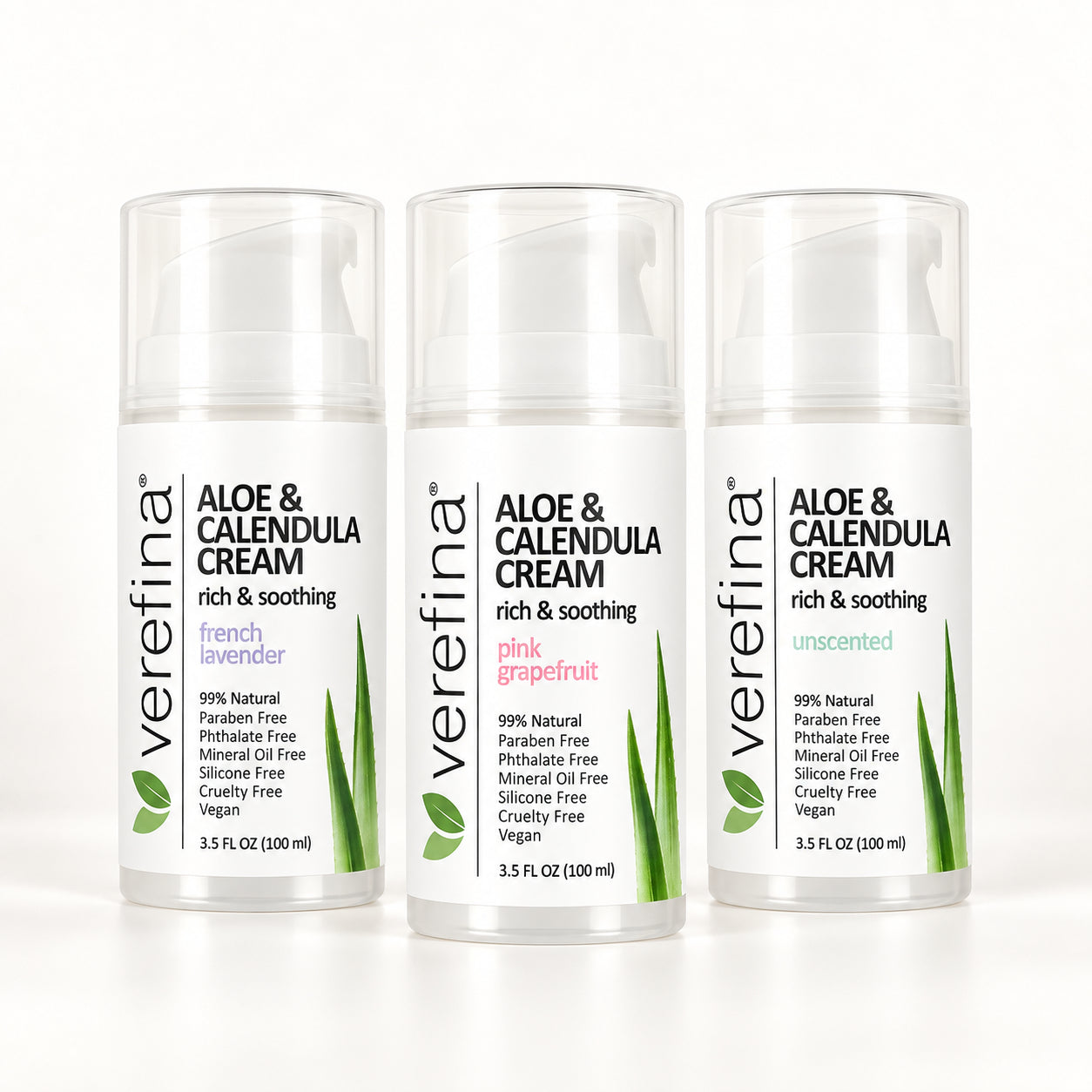
Never apply undiluted essential oil directly to your face or body. Our Aloe Vera + Calendula Cream is a rich, moisturizing option to keep on hand when you want extra comfort after a gentle routine.
Dilution is easier to follow when you can see the common ratios side by side.
| Blend | Drops per teaspoon of carrier | Approximate dilution |
|---|---|---|
| Starting point | 1 drop | About 1% |
| Two drops | 2 drops | About 2% |
| Very reactive skin | 1 drop in 2 teaspoons | Half of 1% |
| Carrier oil weight | 1 teaspoon | About 5 ml |
The Essential Oil Patch Test, Step by Step
A patch test is the best way to learn how your skin responds to essential oils on sensitive skin. It takes a little patience, but it can save you from a bad reaction.
- Pick a small area, like the inner forearm or behind the ear.
- Apply a small amount of your diluted oil to a clean cotton pad.
- Press the pad gently onto the skin.
- Cover the spot loosely and leave it for 24 to 48 hours.
- Check for redness, itching, bumps, or burning.
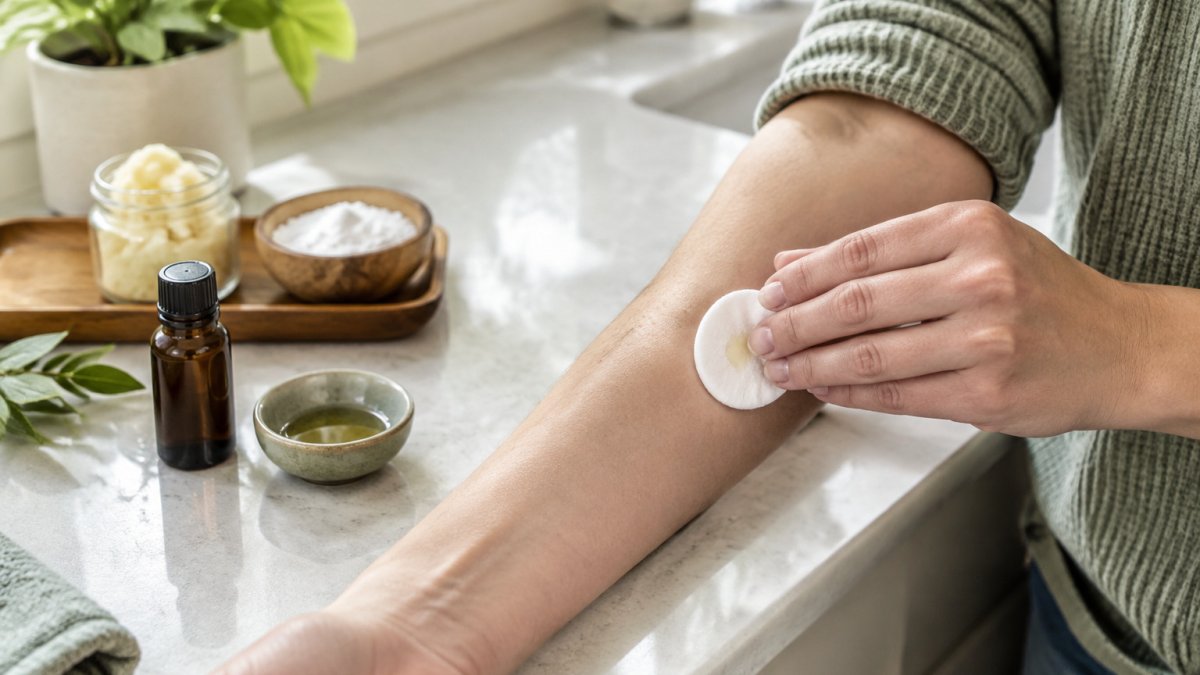
If any irritation develops, wash the area with mild soap and water and stop using the product. If a reaction is strong, spreading, or doesn't fade, talk with a doctor or dermatologist. This guide is for general information only and is not medical advice.
Want a complete walkthrough? Read our guide on how to patch test sensitive skin before trying a new product.
Essential Oils to Avoid for Sensitive Skin
Some essential oils are more likely to irritate. Others are gentler, but still need dilution. Here's a quick way to think about essential oils on sensitive skin.
Often gentler, when diluted:
- Lavender
- Chamomile
- Frankincense
Use with extra caution:
- Cinnamon
- Clove
- Peppermint
- Citrus oils, which can cause sun sensitivity
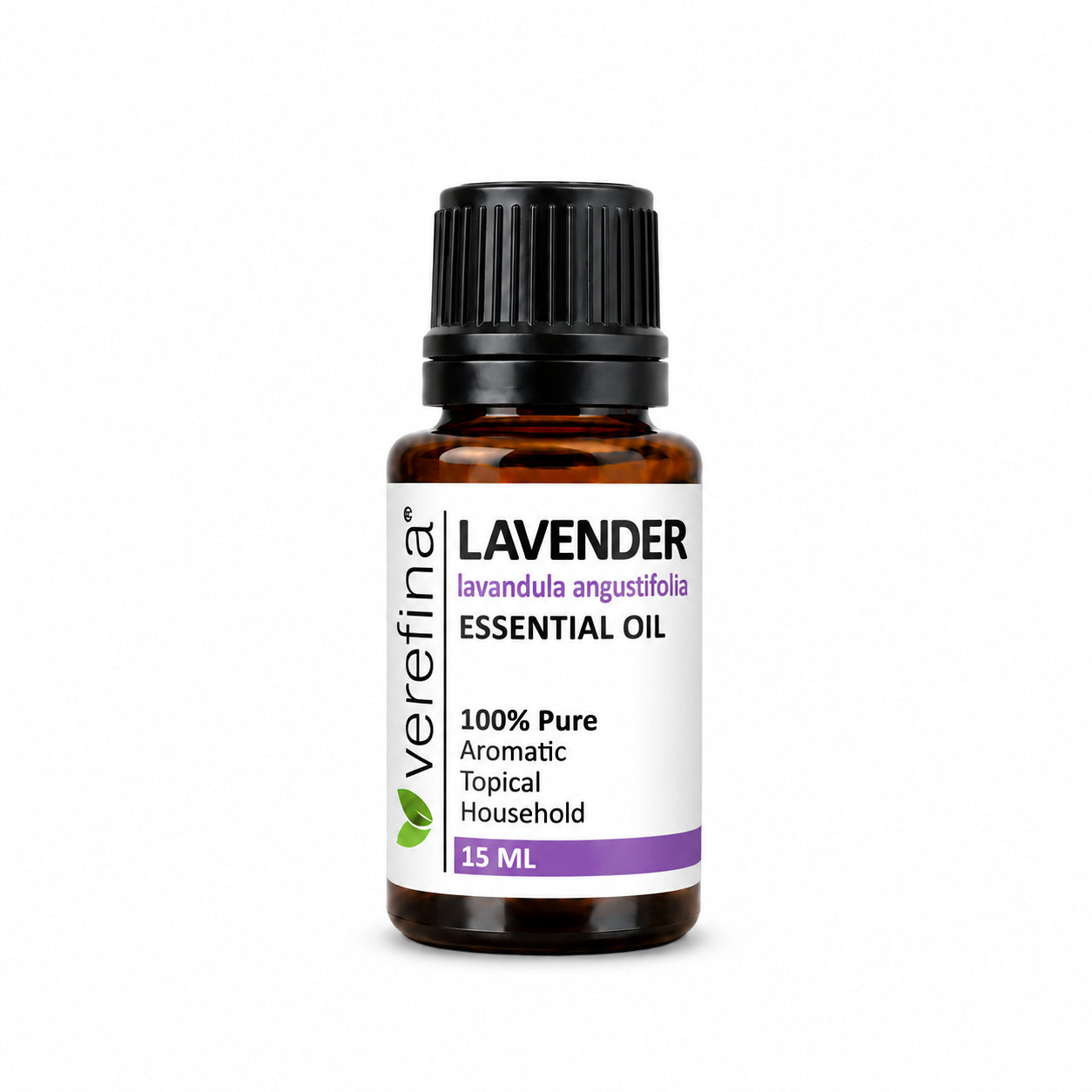
If you're unsure, begin with a single oil like Lavender Essential Oil - 15 ml. Keep your routine simple so you can tell what your skin likes.
Irritation, Allergy, or Sun Sensitivity: Knowing the Difference
Not every reaction to essential oils on sensitive skin is the same. Knowing the difference helps you respond well.
- Irritation usually shows up quickly as redness, stinging, or dryness near the application spot.
- Allergic contact dermatitis can appear later, with itching, swelling, or a rash.
- Sun sensitivity can happen with some citrus oils. Skin may darken or break out after sun exposure.
If you notice any of these, stop using the oil and let your skin rest. Use a gentle moisturizer while your skin recovers.
Choosing the Best Oil for Very Sensitive Skin
For very sensitive skin, less is more when using essential oils on sensitive skin. Choose one oil, use a low dilution, and keep your routine short so you can tell what your skin actually likes.
A simple way to sort oils by risk:
- Lower risk when well diluted: lavender, chamomile, and frankincense are often described as gentler starting points. Lavender is a common first choice for many people, but it is not a guarantee, patch test first.
- Higher risk: cinnamon, clove, peppermint, oregano, and citrus oils. These are more likely to sting, and citrus oils can cause sun sensitivity, so avoid them on skin that will see daylight.
- Skip for now: any oil you have reacted to before, and any blend with several oils at once. A multi-oil blend makes it hard to know which ingredient caused trouble.
If you want to compare single oils, browse our Shop All collection and start with one.
Some readers find that their skin reacts to essential oils no matter how carefully they dilute. That is not a failure, it is useful information. In that case, a essential oils for scent and are alternative is the kinder choice. Keep the ingredient list short, patch test the product the same way you would an oil, and give your skin time to settle before adding anything new.
Watch out: natural fragrance is not automatically gentle. If a product lists essential oils for scent, treat it with the same caution as a standalone oil and patch test it first.
Start Gently With Verefina's Calm, Simple Options
At Verefina, we believe a gentle routine works best, especially when you're working with essential oils on sensitive skin. Start with one oil, dilute it carefully, and test it on a small patch of skin. Then add a soothing moisturizer if your skin needs extra comfort.
Our Aloe Vera + Calendula Cream offers rich, everyday moisture for dry or sensitive-feeling skin. Pair it with a patch-tested oil for a simple ritual you can trust.
Get started with Verefina's gentle essential oil options and find a routine your skin can enjoy.
Frequently Asked Questions
Which essential oils are safe for sensitive skin?
No essential oil is automatically safe for every sensitive skin type, because natural does not mean non-irritating. Many people with reactive skin tolerate lavender and chamomile better than strongly sensitizing oils, but only when they are well diluted in a carrier oil. Always patch test first, and stop use if redness, itching, or burning develops.
What is the best oil for very sensitive skin?
For very sensitive skin, many people start with a well-diluted, single lavender oil and a neutral carrier such as jojoba or sweet almond oil. Lavender has a gentle reputation, but it is still an essential oil and can irritate some people. Keep the concentration low, test on a small area for at least 24 hours, and consider skipping essential oils altogether if your skin reacts easily. If you want a simple option, our Aloe Vera + Calendula Cream is offered unscented and is made for dry or sensitive-feeling skin.
How do you dilute essential oils for skin?
A common starting point for facial or sensitive skin is a very low dilution, meaning only a drop or two of essential oil per teaspoon of carrier oil. Stronger concentrations raise the risk of irritation and allergic contact dermatitis. Use a carrier oil, mix thoroughly, and never apply undiluted oil directly to skin. If you are unsure, ask a qualified professional before use, especially around the face.
How do you patch test an essential oil?
Mix a small amount of the diluted oil into your carrier, apply a dime-sized spot to the inner forearm or behind the ear, and cover it loosely. Check the area after 24 hours and again after 48 hours. Redness, itching, swelling, or bumps mean the oil is not suitable for you. Wash the area with mild soap and water if a reaction starts, and stop use altogether if symptoms worsen or do not settle.

