

How to Avoid Microplastics in Personal Care Products
Quick Summary
Microplastics are small, solid plastic particles. In personal care, they may be added for exfoliation, texture, appearance, or product performance. The ingredient list can help you screen for them, but it does not always reveal a polymer’s physical form or particle size—so a trusted screening tool or a direct answer from the brand can be useful.
- Read the full ingredient list instead of relying on words like “clean” or “natural.”
- Watch for names such as polyethylene, polypropylene, polystyrene, PMMA, PET, and nylon.
- Remember that microbeads are only one type of intentionally added microplastic.
- Consider the formula and the packaging as two separate questions.
- Replace products gradually as you use them up—there is no need to clear your shelf overnight.
Microplastics Are More Than Exfoliating Beads
For years, the conversation about microplastics in beauty focused almost entirely on the tiny plastic beads once used in face scrubs and toothpaste. Those beads mattered, but they were never the whole story.
The U.S. Microbead-Free Waters Act prohibits plastic microbeads in rinse-off cosmetics when they are added to exfoliate or cleanse. That means the classic plastic scrub bead should no longer be found in legally sold U.S. rinse-off products covered by the law. The law is narrower than the broader microplastics conversation, however. It does not cover every solid plastic particle used in every cosmetic for every purpose.
The European Chemicals Agency describes microplastics as small solid plastic particles and notes that intentionally added particles may serve several functions—not only exfoliation, but also controlling thickness, appearance, stability, and more.
That distinction is important. You do not need to panic over every unfamiliar ingredient, but you deserve to know when plastic is being built into a formula and to decide whether it belongs in your routine.
How to Read a Personal Care Label for Microplastics
Start with the complete ingredient list. Front-label language such as “clean,” “natural,” “ocean-friendly,” or “microplastic-free” can be a useful clue, but it is not a substitute for transparency.
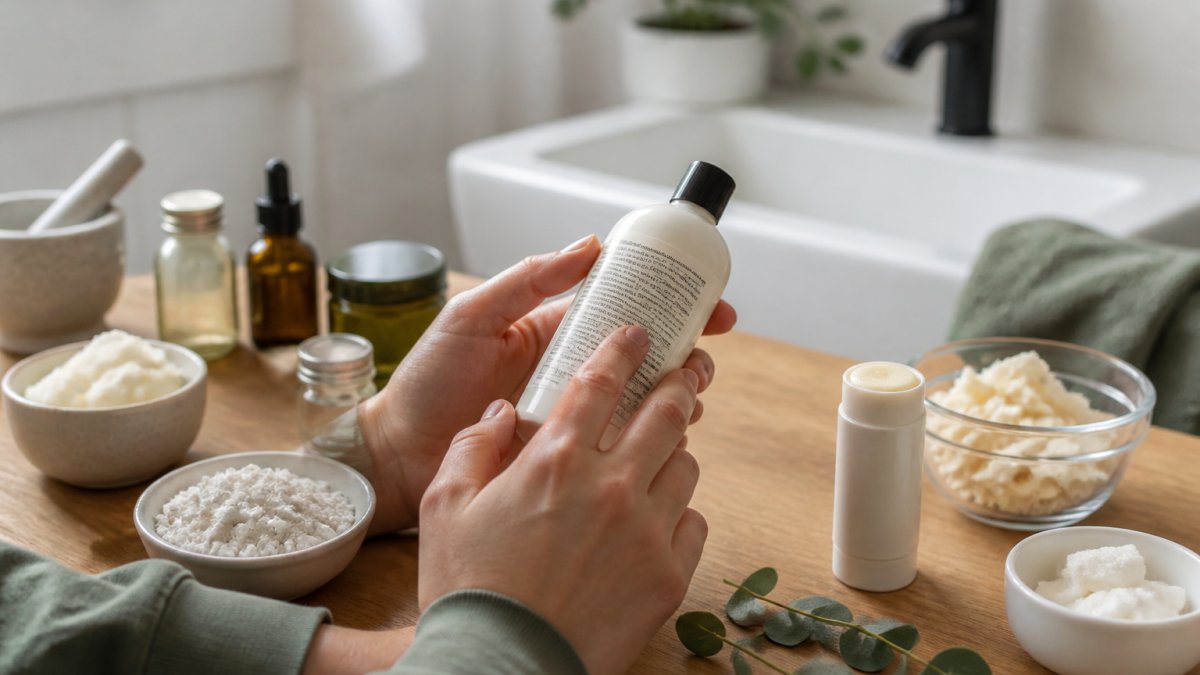
Names commonly flagged by microplastic-screening organizations include:
- Polyethylene (PE)
- Polypropylene (PP)
- Polystyrene (PS)
- Polymethyl methacrylate (PMMA)
- Polyethylene terephthalate (PET)
- Nylon-6, nylon-12, or nylon powder
- Polyurethane
- Certain acrylate copolymers
Here is the frustrating but honest part: a name alone may not tell you whether a polymer is present as a solid particle, a liquid, a gel, or a water-soluble material. Physical form, particle size, and biodegradability all matter to technical definitions of microplastics. There is also no rule that plastic ingredients must appear near the end of the list.
So use the list as a screening tool—not a perfect verdict. If you want help, Beat the Microbead maintains an ingredient-checking resource. When a product is unclear, ask the brand whether the formula contains intentionally added solid plastic particles.
For more help separating ingredient facts from marketing language, read our guide to reading skincare ingredient labels.
Microplastics, Synthetic Polymers, and Silicones Are Not Identical
These categories overlap in everyday conversation, but they are not technically interchangeable.
A microplastic is a small solid plastic particle. A synthetic polymer may instead be liquid, gel-like, dissolved, or water-soluble and therefore fall outside a particular microplastic definition. Silicones such as dimethicone are synthetic polymers too, but they are not the same thing as polyethylene microbeads.
That does not mean you have to welcome every polymer into your routine. At Verefina, we believe personal care can be beautifully effective without intentionally added microplastics, silicones, mineral oil and other petroleum-derived ingredients, or synthetic fragrance. We prefer purposeful ingredients that support the formula without leaving unnecessary plastics behind.
The point is not to pretend every ingredient carries the same environmental concern. It is to read accurately, ask better questions, and choose according to your own standards.
Where to Look First
Because classic rinse-off microbeads are prohibited in the United States, do not assume every current face wash or toothpaste contains them. A more useful approach is to look broadly across products where polymers may be used for texture, film formation, slip, bulk, or appearance.
- Makeup: powders, mascara, foundation, lipstick, and glitter products may use plastic particles or polymer film-formers.
- Sunscreen: some formulas use polymers to improve spread, water resistance, or the feel of the product.
- Hair care: shampoos, conditioners, styling products, and hairsprays may use polymers for conditioning, hold, or texture.
- Deodorant: some sticks, creams, or sprays use synthetic polymers for texture or performance.
- Shaving products: polymers may be used for slip, thickness, or film formation.
- Scrubs and polishes: the old plastic microbead has largely been phased out, but the label is still worth reading.
You do not need to memorize a chemistry dictionary. Choose the three products you replace most often, check those labels first, and build from there.
Formula and Packaging Are Two Different Questions
A formula can contain no intentionally added microplastics and still come in plastic packaging. Likewise, glass packaging does not automatically make the formula plastic-free.
Ask two separate questions:
- Does the formula contain intentionally added solid plastic particles?
- What packaging is used, and can it realistically be reused or recycled where I live?
Glass, metal, paperboard, and refill systems can reduce some plastic use, but each has tradeoffs involving weight, breakage, shipping, product stability, and cost. We believe progress should be honest. A brand should not use one thoughtful packaging choice to distract from a questionable formula—or vice versa.
Better Exfoliation Without Plastic Beads
Good exfoliation does not require plastic. Depending on the product and where it will be used, alternatives may include finely ground oats, sugar, salt, clay, or plant-based powders.
- Finely ground oats can feel soft and comforting, especially in gentle body products.
- Sugar dissolves with water and works well in many body scrubs.
- Salt gives a stronger scrub but can sting irritated or freshly shaved skin.
- Clay and botanical powders can add mild polishing or texture, depending on particle size and formulation.
Natural does not automatically mean gentle. Coarse particles and heavy pressure can irritate skin, so use a light touch and choose a product designed for the area you are exfoliating. Our article on how to exfoliate without overdoing it offers more guidance.
A Calm, Practical Way to Make the Switch
Learning about microplastics can make a bathroom shelf suddenly feel overwhelming. We do not think fear is useful. Awareness is.
- Use what you already own unless a product is causing a problem.
- When something runs out, read the replacement’s full ingredient list.
- Screen unfamiliar polymers with a reputable ingredient tool.
- Ask the brand a direct question when the answer is unclear.
- Choose the formula that best reflects your priorities.
At Verefina, thoughtful formulation is not a trend or a front-label claim. It is the reason we avoid intentionally added microplastics, silicones, petroleum-derived ingredients, and synthetic fragrance. You can explore our body care, natural deodorants, and oral care one label at a time.
One label will not solve plastic pollution. But reading carefully, asking direct questions, and supporting brands that formulate transparently are meaningful places to begin. Explore Verefina’s full collection and build a routine that feels both effective and aligned with what you believe.
Frequently Asked Questions
How can I avoid microplastics in personal care products?
Read the complete ingredient list and screen names such as polyethylene, polypropylene, polystyrene, PMMA, PET, nylon, polyurethane, and certain acrylate copolymers. Because a name may not reveal physical form or particle size, use a reputable screening tool or ask the brand whether the formula contains intentionally added solid plastic particles.
Are plastic microbeads still used in face wash and toothpaste?
In the United States, plastic microbeads added to rinse-off cosmetics for exfoliating or cleansing are prohibited under the Microbead-Free Waters Act, which also covers toothpaste. The broader category of intentionally added microplastics is more complicated and may include particles used for functions beyond scrubbing.
Does clean beauty mean microplastic-free?
No. Clean beauty does not have one legally defined standard. Read the ingredient list and look for a clear, specific statement from the brand rather than relying on the word clean alone.
Is dimethicone a microplastic?
Dimethicone is a silicone polymer, not a plastic microbead. Whether it meets a particular microplastic definition depends on its physical form and the definition being used. Verefina chooses not to formulate with silicones, even though silicones and solid microplastics are not technically identical.

