

How to Purchase Toxin-Free Body Care: A Smart Shopper's Guide
Table of Contents
- What 'Toxin-Free' Actually Means for Body Care
- Body Care Ingredients to Avoid
-
How to Read Labels and Screen Ingredients
- 1. Start with the ingredient list, not the front of the bottle
- 2. Scan for your known irritants first
- 3. Check the preservative system
- 4. Look at the moisturizers and actives
- 5. Weigh certifications as one signal, not the whole story
- 6. Distinguish hazard from risk
- 7. Notice what is missing
- 8. Trust brands that explain themselves
- Non-Toxic Body Lotion and Moisturizer Options
- Choosing an Aluminum-Free Deodorant That Actually Works
- Finding Clean Beauty Brands to Trust
- Your Toxin-Free Body Care Shopping Checklist
- Frequently Asked Questions
Last Updated: October 5, 2026
What 'Toxin-Free' Actually Means for Body Care
When you see "toxin-free" on a body care label, it's tempting to think it means the product is perfectly safe.
Toxin-free body care doesn't have a legal definition. It's marketing language, not a regulated claim.
The key is knowing which ingredients matter to you.
A truly transparent brand tells you exactly what's in the bottle and why. That's where real trust begins.
Body Care Ingredients to Avoid
Not every ingredient needs to be eliminated. But some deserve closer scrutiny, so you can make choices aligned with your values and your skin's needs.
Parabens and phthalates
Parabens are preservatives that prevent bacterial growth. They're inexpensive and effective, which is why they've been standard for decades.
Phthalates make fragrances last longer and adhere to skin. They're often hidden under the word "fragrance" because fragrance formulas are proprietary. Many people avoid them simply because they're not transparent.
Many brands now use alternative preservatives like phenoxyethanol or potassium sorbate. Essential oils offer a transparent scent option, though they can still trigger sensitivity.
Synthetic fragrances and sulfates
Synthetic fragrances can trigger sensitivity in people with reactive skin or respiratory issues, and they're a common source of undisclosed chemicals. Essential oil-based scents are more transparent.
Sulfates like sodium lauryl sulfate strip oils from skin and hair. They create a satisfying lather but can leave skin feeling tight. Gentler cleansing agents exist, they just don't foam as dramatically, which doesn't make them less effective.
How to Read Labels and Screen Ingredients
Most roundups tell you to "read the label." Few show you how. Here's the process we walk customers through.
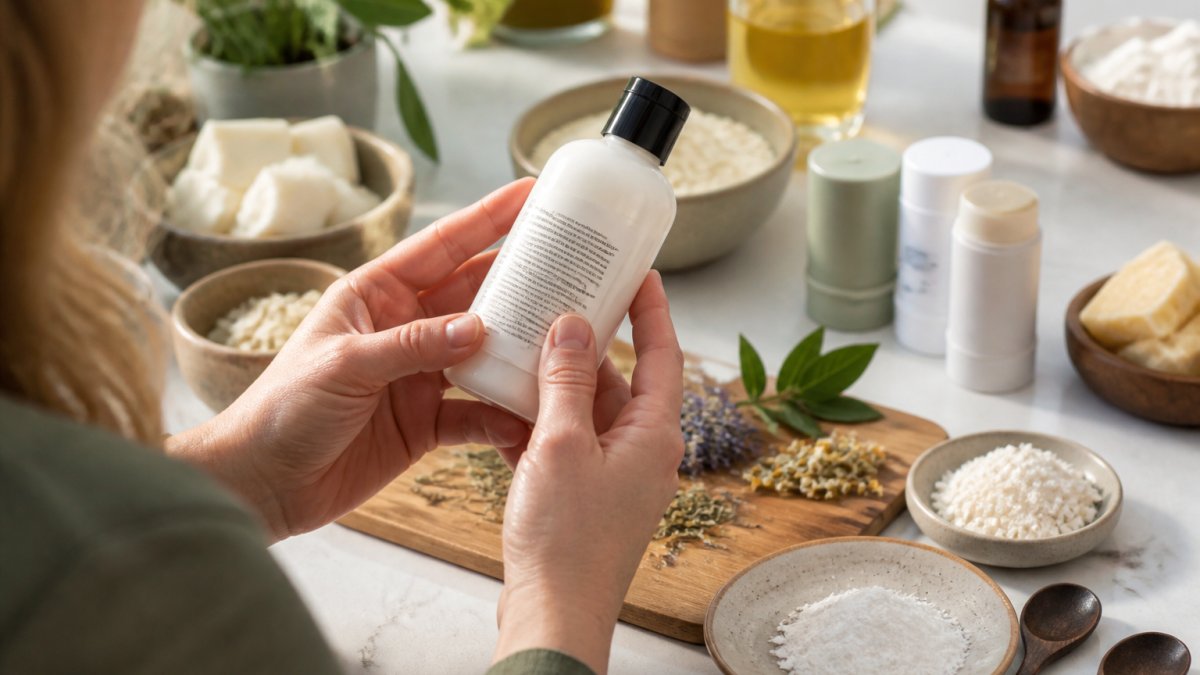
1. Start with the ingredient list, not the front of the bottle
Words like "clean," "natural," and "toxin-free" have no legal definition in body care. The ingredient list is the only part of the label with real rules behind it. In the United States, ingredients are listed in descending order by weight, so the first five or six names tell you what the product mostly is.
2. Scan for your known irritants first
Before you judge a formula, check it against your own skin. If you react to baking soda, fragrance, or certain essential oils, look for those names early. Common ones to know:
- Fragrance (parfum), a catch-all term that can hide dozens of undisclosed compounds, including phthalates used to make scent last
- Parabens, preservatives such as methylparaben, propylparaben, and butylparaben
- Sulfates, sodium lauryl sulfate (SLS) and sodium laureth sulfate (SLES), the foaming agents that can leave skin feeling tight
- Baking soda (sodium bicarbonate), a common deodorant ingredient that some sensitive skin types find irritating
- Aluminum compounds, aluminum chlorohydrate, aluminum zirconium, and similar salts used in antiperspirants
3. Check the preservative system
Any product that contains water needs a preservative, or it will grow bacteria. That's chemistry, not a flaw. What matters is whether the brand names its preservatives clearly. Phenoxyethanol, potassium sorbate, and sodium benzoate are common, well-studied options.
4. Look at the moisturizers and actives
Once you clear the first few names, look at what's actually doing the work. Shea butter, coconut oil, glycerin, aloe vera, sunflower oil, and apricot kernel oil are recognizable, effective moisturizers. If a lotion lists water first and then mostly fragrance and preservatives, it won't do much for dry skin.
5. Weigh certifications as one signal, not the whole story
Certifications can help, but they aren't required for a product to be good. EWG Verified means a product was screened against the Environmental Working Group's standards. USDA Organic means agricultural ingredients were grown without synthetic pesticides. Neither guarantees a product will work for your skin, and no seal doesn't mean a formula is unsafe. Treat certifications as one data point among several.
6. Distinguish hazard from risk
This is the part most articles skip. A hazard is a property an ingredient may have under some conditions. Risk is the likelihood of harm at the dose and exposure in a real product. Many ingredients flagged online are flagged based on high-dose animal studies or industrial exposure, not the amount in a body lotion. Not every warning deserves the same weight.
7. Notice what is missing
If a brand claims to be essential oils for scent and are but lists essential oils, look closer, essential oils are natural, but they're still fragrance and can still trigger sensitivity. If a brand says aluminum-free but lists an aluminum salt, read carefully; not all aluminum compounds function the same way.
8. Trust brands that explain themselves
A transparent brand tells you what's in the bottle and why. It names its preservatives, explains its scent choices, and acknowledges limits, like recommending a patch test. That honesty is often worth more than any seal.
According to the FDA's guidance on cosmetic ingredient safety, companies are responsible for ensuring their products are safe, but the FDA does not pre-approve cosmetics the way it does drugs.
Non-Toxic Body Lotion and Moisturizer Options
Lotion is where most toxin-free shopping starts, but it's not the whole routine. Here's how we think about moisturizers, plus the other categories worth screening the same way.
What makes a body lotion actually work
A good lotion does three things: it adds water (humectants like glycerin and aloe), seals it in (emollients like sunflower and apricot kernel oils), and softens rough patches (occlusives like shea butter and coconut oil).
When you compare options, look at the second and third ingredients, not just the first. Water is almost always first. What comes next tells you whether the formula is built for real moisture or just a pleasant feel.
Match the formula to your skin
- Very dry or flaky skin, reach for richer creams with shea butter, cocoa butter, or coconut oil near the top of the list
- Normal to combination skin, lighter lotions with glycerin, aloe, and fast-absorbing oils feel comfortable without heaviness
- Sensitive or reactive skin, unscented formulas, or ones scented only with gentle essential oils, are usually the safer starting point
- Body acne or back breakouts, lighter, non-comedogenic oils like sunflower and apricot kernel are less likely to clog pores than heavy butters
Our Aloe Vera + Calendula Cream is built for skin that needs substantial moisture. Aloe brings hydration, calendula soothes, and sunflower and apricot kernel oils create lasting emollience. It comes unscented or with essential oil scents, so you can choose based on your sensitivity.

A note on cost per use
Upfront price isn't the whole story. A larger tub of rich cream often costs more at checkout but lasts months, while a small bottle of lightweight lotion may need replacing every few weeks. Estimate how many uses you get per container and divide. Refillable or larger-format options usually win on cost per use and cut packaging waste.
The rest of the routine
The same screening criteria apply across every body-care category:
- Cleanser, look for gentle surfactants instead of harsh sulfates; a body wash does not need to foam heavily to clean well
- Body oil, single-ingredient oils like jojoba or sweet almond are simple, transparent, and easy to patch test
- Deodorant, choose aluminum-free formulas if you want to avoid antiperspirant salts; see our deodorant section below for how to pick one
- Sunscreen, mineral formulas with zinc oxide or titanium dioxide are a common choice for people screening chemical filters
- Hand and foot care, the same lotion criteria apply; richer balms work well for heels and cuticles
Patch test before you commit
Whatever you choose, patch test first. Apply a small amount to your inner forearm, wait 24 hours, and check for redness, itching, or irritation. If anything develops, stop using the product. This matters most with essential-oil-scented formulas and anything you plan to use on sensitive areas.
If you are building a simple ritual, start with one moisturizer and one deodorant, use them for a few weeks, and add categories only when you know how your skin responds.
Choosing an Aluminum-Free Deodorant That Actually Works
The shift from antiperspirant to deodorant confuses many people. Antiperspirants stop sweat; deodorants manage odor.
Magnesium-based deodorants work differently than traditional formulas. Magnesium neutralizes odor at the source rather than masking it.
Our Magnesium Deodorant is a low-baking-soda formula, which matters if your skin is sensitive to baking soda.

If you tolerate baking soda well and need maximum odor protection for active days or travel, our Moisturizing Deodorant Cream offers extra strength.

The transition from antiperspirant takes time. Your underarms will feel different at first, that's normal.
Finding Clean Beauty Brands to Trust
Not every brand making clean claims delivers. Some use greenwashing: they highlight one good ingredient while hiding questionable ones elsewhere.
Real trust comes from transparency. Look for brands that:
- List every ingredient clearly and explain why each one is there
- Show you what they don't use and why those exclusions matter
- Acknowledge limitations honestly (like "patch test before full use" or "this formula works best for X skin type")
- Back up claims with ingredient sourcing or certifications when relevant
- Respond helpfully when customers ask questions
Avoid brands that use fear-based marketing or make vague promises about "detoxing" or "healing." Skin care isn't medicine.
According to the FDA's guidance on cosmetic ingredient safety, companies are responsible for ensuring their products are safe. But the FDA doesn't pre-approve cosmetics the way it does drugs.
Your Toxin-Free Body Care Shopping Checklist
Use this checklist when evaluating a new product:
- Read the full ingredient list, not just the marketing claims
- Identify your known irritants and scan for them
- Check the preservative system, is it named clearly?
- Look for certifications if they're important to you
- Assess the formula's main moisturizers or actives
- See if the brand explains why they made certain choices
- Patch test on a small area before full use
- Give the product at least 2-3 weeks if it's a significant change
- Stop using it if irritation develops, and try something gentler
Remember: the most expensive product isn't always the best. The best product is the one that works for your skin and aligns with your values. What matters is that you understand what's in it and why you chose it.
Frequently Asked Questions
What does 'toxin-free' mean when shopping for body care products?
'Toxin-free' refers to products formulated without synthetic chemicals of concern like parabens, phthalates, sulfates, and synthetic fragrances. However, the term isn't regulated by the FDA, so brands define it differently. When evaluating toxin-free body care, focus on reading the full ingredient list rather than relying on marketing claims alone. Look for naturally derived ingredients and check for third-party certifications that verify safety claims.
How can I tell if a clean beauty brand is actually trustworthy?
Trustworthy clean beauty brands publish their complete ingredient lists, explain why each ingredient is included, and are transparent about their sourcing. Look for brands that acknowledge limitations, for example, stating which skin types their products suit best or recommending patch testing. Check for certifications from recognized bodies, read customer reviews mentioning specific results, and see if the brand responds to questions about ingredients or formulation choices.
What should I look for when choosing an aluminum-free deodorant?
Aluminum-free deodorants work differently than antiperspirants, they manage odor but don't stop sweating. Look for formulas combining odor-fighting ingredients like magnesium or baking soda with moisture-absorbing powders like arrowroot. Consider your skin sensitivity: if you have reactive skin, a low-baking-soda or magnesium-based option may feel gentler. Test for at least a week before deciding if it works for your activity level.
Are non-toxic body lotions effective for very dry skin?
Non-toxic body lotions can be highly effective for dry skin when they contain nourishing oils and humectants like glycerin or aloe vera. Rich creams with plant oils, butters, and emollients provide lasting moisture without synthetic thickeners. For very dry or weather-stressed skin, look for products labeled for sensitive or dry skin types, and apply to damp skin to lock in hydration. Patch test first if your skin is reactive.
Finding toxin-free body care that actually works means looking past marketing language to understand ingredients. The products you choose should reflect your values without requiring a chemistry degree to evaluate. We create deodorants and body care with purposeful, clearly named ingredients, because you deserve to know exactly what you're putting on your skin. Explore our collection and find the formulas that work for your routine.
