

Is Organic Skincare Better for Sensitive Skin?
Last Updated: October 25, 2026
Quick Summary
No, organic skincare is not automatically better for sensitive skin. A Cleveland Clinic review found that 90% of products labeled natural, clean, or suitable for sensitive skin contained allergens that can cause contact dermatitis. Judge the full formula and patch test rather than trusting the front of the bottle.
- The USDA Organic seal requires at least 95% certified organic ingredients by weight, excluding water and salt.
- Natural and clean have no legal definition, so neither word tells you about irritation risk.
- Patch test one product on your inner forearm, checking at 15 minutes, 24 hours, and over 3 to 5 days.
- Avoid added fragrance, citrus and clove oils, and high-alcohol witch hazel when your skin is reacting.
- Introduce one new product at a time and give it two weeks before judging.
Table of Contents
- The Short Answer on Organic Skincare and Sensitive Skin
- Organic, Natural, Clean, and Conventional: What the Labels Actually Mean
- Why Natural Origin Does Not Guarantee a Calm Reaction
- Organic Skincare Ingredients to Avoid When Your Skin Reacts
- How to Patch Test Skincare Products Without Guessing
- Choosing a Gentle Face Wash for Sensitive Skin
- A Simple Skincare Routine for Sensitive Skin
- Start With One Product and Give It Two Weeks
- Frequently Asked Questions
The Short Answer on Organic Skincare and Sensitive Skin
No, organic skincare is not automatically better for sensitive skin. According to a 2026 Market.us skincare survey, 59% of respondents say they prefer products made with natural or organic ingredients.
Here is the number that should stop you mid-scroll: Cleveland Clinic's review of natural skincare research reports that 90% of products labeled natural, clean, or suitable for sensitive skin contained allergens that can cause contact dermatitis.
At Verefina, we make naturally derived facial care, and we still tell you this plainly: a plant name on a label says nothing about how your skin will respond.
Below, we break down what the labels mean, which ingredients to watch, and how to test a product without gambling on your whole face.
Organic, Natural, Clean, and Conventional: What the Labels Actually Mean
Label language is where sensitive-skin shoppers get lost.
Organic is the only one of the four with a legal backbone. Under the USDA National Organic Program, a product can carry the USDA Organic seal only if at least 95% of its ingredients (by weight, excluding water and salt) are certified organic. Products with 70-94% organic content may say "made with organic ingredients" but cannot use the seal. Anything below 70% can list organic ingredients on the panel but cannot use the word "organic" on the front label. That is a real standard, verified by accredited certifiers, not a marketing mood.
Natural has no legal definition in cosmetics. The FDA does not define or regulate the term for personal care.
Clean is pure marketing. No regulator defines it, no certifier audits it, and the criteria shift from brand to brand.
Conventional covers everything else, including lab-made ingredients that are often among the best-tolerated options for reactive skin, think glycerin, squalane, and well-studied preservatives.
How to verify a label claim in about two minutes
- Look for a seal, not a word. The USDA Organic seal is the one to know. If a product says "organic" without it, check the ingredient panel for the percentage breakdown.
- Search the certifier. Third-party programs publish certified-product databases. If a brand claims certification, the certifier's site should confirm it.
- Read the ingredient panel, not the front. Ingredients are listed in descending order of concentration up to 1%, so the first five names tell you most of the story.
- Check the fragrance line. "Fragrance," "parfum," and "natural aroma" are all catch-alls that can hide dozens of compounds, a key point for reactive skin.
The takeaway: organic is a verifiable farming standard, natural and clean are unregulated words, and conventional is not a synonym for harsh. Judge the full formula, not the front of the bottle.
Here is how the four words shoppers see most often actually differ, and how to check each one.
| Label | Legal standing | How to verify |
|---|---|---|
| Organic | USDA seal requires at least 95% certified organic ingredients | Look for the USDA Organic seal, then check the panel |
| Natural | No legal definition; FDA does not regulate the term | Tells you nothing about concentration or irritation risk |
| Clean | Pure marketing; no regulator or certifier defines it | Treat it as a vibe, not a standard |
| Conventional | Covers everything else, including lab-made ingredients | Judge the full formula, not the front of the bottle |
Why Natural Origin Does Not Guarantee a Calm Reaction
Plants defend themselves with chemistry. The same compounds that protect a leaf from insects and fungi can land on your skin as an allergen.
Paula's Choice notes that some natural and organic ingredients can cause sensitivities that build over time, and some are simply harsh.
Your skin barrier does the real work here. When it is intact, most ingredients stay on the surface where they belong.
Plant Extracts and Essential Oils That Trigger Reactions
Some of the most common culprits in natural formulas:
- Essential oils, especially citrus oils, peppermint, eucalyptus, and clove oil
- Fragrance, whether synthetic or "natural perfume"
- Witch hazel, particularly high-alcohol distillates
None of these is universally bad. But if your skin reacts easily, they are the first places to look.
Organic Skincare Ingredients to Avoid When Your Skin Reacts
Start by reading the full ingredient list, not the front of the bottle. The words "organic skincare ingredients to avoid" are not a fixed list, because sensitivity is individual.
Watch for denatured alcohol high in the list, added fragrance of any kind, and citrus or clove oils.
Dermatology Times reporting on natural skincare sales noted that natural skincare made up more than a quarter of USD 5.6 billion in annual skincare sales back in 2018. Plenty of choice, plenty of label noise.
Our advice: fewer ingredients, clearer names, and a formula you can actually finish reading.
How to Patch Test Skincare Products Without Guessing
Patch testing is the single most useful habit for reactive skin, and most people skip it because nobody explains the timing. Here is the protocol we suggest, with the observation windows that actually matter.
The stepwise protocol
- Choose one product. Not three. One new formula at a time, so a reaction points to a single culprit.
- Pick your test spot. The inner forearm is the standard. Behind the ear or the side of the neck works too if those areas are more representative of your face.
- Cleanse and dry the area. Pat it dry and let it settle for a few minutes.
- Apply a pea-sized amount. Leave it uncovered. Do not rub it in aggressively or occlude it with a bandage, you want a realistic exposure.
- Watch for 15 minutes. Immediate stinging, itching, or redness in this window is a stop sign. Wash it off with lukewarm water.
- Check again at 24 hours. Many reactions are delayed. Look for redness, small bumps, or a texture change.
- Repeat daily for 3-5 days. Apply to the same spot each day and check morning and evening. Cumulative irritation, the kind that builds with repeated exposure, often shows up on day three or four, not day one.
- Then test on a small patch of face. If the forearm test is clear, try a dime-sized area on your jawline or cheek for two to three days before going full-face.
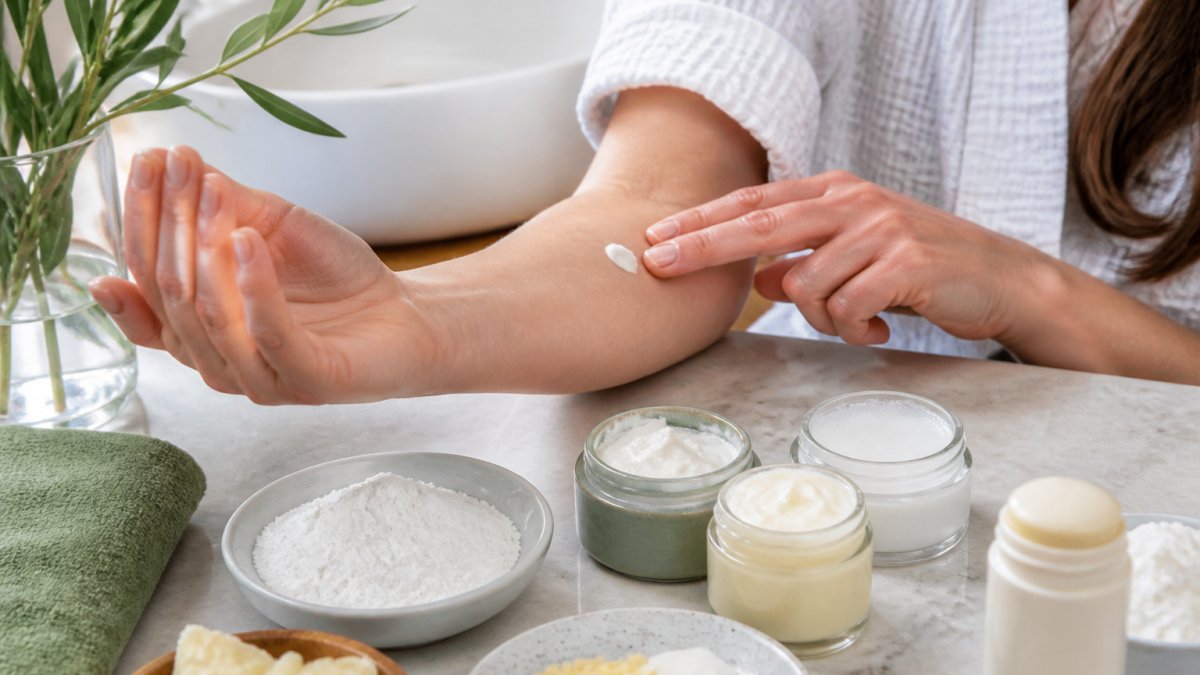
What a reaction looks like, and what to do next
Reactions come in two rough patterns. Immediate reactions show up within minutes to a couple of hours: stinging, itching, redness, or a warm feeling. Delayed reactions can take 24 to 72 hours and often look like small bumps, flaking, or a rash that spreads slightly beyond where you applied the product.
If you react:
- Stop using the product. Do not push through hoping skin will adjust. It usually does not.
- Wash the area with lukewarm water and a mild, fragrance-free cleanser. Skip exfoliants and actives on that spot for a few days.
- Note what happened, the product name, the timing, and the symptoms. That record is gold if you see a dermatologist later.
A quick decision framework for different sensitivities
General sensitivity, occasional stinging, redness after a new product, usually responds well to the stepwise test above. If you have a diagnosed condition such as eczema or rosacea, your skin's baseline is different: test on a smaller area, introduce products more slowly, and run new formulas past your dermatologist before regular use.
Our advice stays simple: one product, one spot, five days, and an honest look. That is enough to tell you whether a formula belongs in your routine.
Choosing a Gentle Face Wash for Sensitive Skin
A gentle face wash for sensitive skin should clean without stripping. Look for creamy, low-sudsing formulas, short ingredient lists, and no added fragrance if your skin is reactive.
We formulated our Lemon Coconut Cleanser around that idea: creamy and non-sudsing, with rounded jojoba beads, coconut and apricot kernel oils, aloe, and glycerin. It finishes soft and comfortable rather than tight.

A Simple Skincare Routine for Sensitive Skin
Fewer steps, repeated consistently, beats a ten-product routine your skin has to survive. For a deeper practical guide to building a gentle routine for reactive skin, see our full guide. Ours looks like this:
- Morning: rinse with lukewarm water or a small amount of gentle cleanser
- Then: a light layer of moisturizer while skin is still slightly damp
- Evening: cleanse to remove the day, then moisturize again
For moisturizer, our Aloe Vera + Calendula Cream is a rich option for dry or sensitive-feeling skin, and it comes in an Unscented version for anyone avoiding essential oils.

Start With One Product and Give It Two Weeks
One product, two weeks, one honest look in the mirror. That is the whole method. Introducing five products at once tells you nothing about which one your skin disliked.
If you are ready to try a single gentle product first, our Sea Buckthorn Facial Cream is a comfortable place to start for dry, thirsty skin.

Watch out: if you layer a new cleanser, serum, and moisturizer in the same week and react, you will have no idea which one caused it. Slow down.
Frequently Asked Questions
Can organic skincare irritate sensitive skin?
Yes. Cleveland Clinic reports that 90% of natural skincare products in a study of nearly 1,700 products contained allergens that can cause contact dermatitis. Plant extracts, essential oils, and citrus oils are common triggers. Organic certification speaks to how ingredients are grown, not to how gentle a finished formula is. Patch test any new product on your inner forearm for a few days before using it on your face, and stop if you notice redness, itching, or stinging.
What organic skincare ingredients should people with sensitive skin avoid?
Watch for essential oils such as clove oil and citrus oils, witch hazel, alcohol high on the ingredient list, and added fragrance. Raw honey and some plant extracts can also cause reactions in reactive skin. Ingredients are listed by concentration, so position matters. If a known allergen appears near the top, that is a reason to be cautious. Keep your routine short and introduce one new product at a time so you can tell what caused a reaction.
How do I choose a gentle face wash for sensitive skin?
Look for a creamy, non-sudsing cleanser that leaves skin comfortable rather than tight. Avoid harsh detergents and heavy fragrance. Our Lemon Coconut Cleanser uses rounded jojoba beads and coconut and apricot kernel oils to lift daily buildup gently, and our Fruit Enzyme Cleanser offers fruit-derived acids for dullness with a sun sensitivity warning worth reading. Patch test first, and rinse with lukewarm rather than hot water.
How should I patch test skincare products, and how long should I wait?
Apply a small amount to your inner forearm or behind your ear, twice a day for three to five days, and leave it alone otherwise. If there is no redness, itching, or stinging, try it on a small area of your face. Give a new product about two weeks of regular use before judging results. Stop immediately if irritation develops, and speak with a dermatologist about persistent reactions.
Your skin does not need a perfect shelf of products. It needs a short list it tolerates and a routine you will actually keep. Verefina makes naturally derived facial care with purposeful ingredients, honest descriptions, and simple formulas you can read all the way through. Start with one product, patch test it properly, and give your skin the two weeks it deserves. Explore the collection and find the one step that fits your routine.

