

Natural Skincare for Reactive Skin: A Calm Routine
Table of Contents
- What Reactive Skin Types Actually Need From Natural Skincare
- Common Triggers Behind Skin Reactivity
- Soothing Ingredients to Look for in Natural Skincare for Reactive Skin
- How to Choose a Gentle Face Wash for Sensitive Skin
- How to Patch Test Skincare Products Before You Commit
- Building a Minimalist Skincare Routine for Reactive Skin
- Ingredient Interactions, Environmental Stress, and the Emotional Side of Reactive Skin
- Frequently Asked Questions
Last Updated: October 4, 2026
What Reactive Skin Types Actually Need From Natural Skincare
If your skin stings when you apply a new serum, turns red after a warm shower, or reacts to products your friends swear by, you are likely dealing with reactive skin. Natural skincare for reactive skin types is not about finding the strongest botanical blend.
Below, we cover the signs that separate reactivity from ordinary dryness, the ingredients worth looking for, and a three-step rhythm you can start tonight.
Signs your skin is reactive, not just dry
Dry skin feels tight and rough. Reactive skin reacts. It stings, burns, or flushes within minutes of contact with a product, and the reaction often appears in patches rather than evenly across your face. A common mistake is treating reactivity with heavier creams, which can add more ingredients for already irritated skin to handle. If your skin protests more than it simply feels dry, start by subtracting products rather than adding them.
Why the skin barrier decides how much your skin tolerates
The skin barrier is the outermost layer of skin, made of lipids and skin cells that hold moisture in and keep irritants out. When that lipid barrier is compromised, moisture escapes through a process called transepidermal water loss, and outside irritants slip past more easily. That is why two people can use the same product with opposite results. A stronger barrier tolerates more; a weakened one reacts to almost everything.
Common Triggers Behind Skin Reactivity
Reactivity usually comes from a handful of repeat offenders rather than one dramatic cause. Synthetic preservatives, added fragrance, and drying cleansers are frequent culprits, but so are heat, sun exposure, and over-cleansing.
Essential oil sensitivity is worth knowing about too. Essential oils give our deodorants their scent, and while they are plant-derived, some skin simply tolerates them better than others.
Soothing Ingredients to Look for in Natural Skincare for Reactive Skin
Look for short ingredient lists built around calming, plant-derived ingredients rather than long lists of actives. The most useful formulas for reactive skin combine soothing agents with real moisture retention, so the barrier gets support rather than stimulation.
Botanical oils and extracts that calm and comfort
Calendula is a gentle botanical traditionally used to care for delicate-feeling skin. Aloe vera brings lightweight botanical hydration. Sea buckthorn and rosehip are antioxidant-rich oils with naturally occurring fatty acids that help nourish the skin barrier. Tamanu oil is deeply conditioning and appears in our Rescue Balm, a concentrated balm for dry, rough, chafed, or weather-exposed patches.
Hydration binders: humectants, emollients, and lipids
Humectants attract and hold water. Vegetable glycerin and hyaluronic acid are common examples, and both appear in our Rosewater Mist. Emollients soften and smooth, like sunflower and apricot kernel oils. Lipids help seal moisture in and support the barrier itself. Reactive skin generally does best with all three in the routine, layered from lightest to richest.

How to Choose a Gentle Face Wash for Sensitive Skin
A gentle face wash for sensitive skin should cleanse without stripping. That sounds simple, but the difference between a cleanser that calms your skin and one that sets it off usually comes down to three things: the surfactants, the pH, and how you use it.
What to look for on the label
Surfactants are the ingredients that lift oil and debris off your skin. Some are harsh, and some are mild. For reactive skin, look for these gentler options:
- Coco-glucoside and decyl glucoside, plant-derived, low-foaming, and among the mildest surfactants available.
- Sodium cocoyl isethionate, a mild cleanser base often used in cream and bar formulas for sensitive skin.
- Glycerin, not a surfactant, but a humectant that keeps the formula from leaving skin tight.
Ingredients worth avoiding if your skin reacts easily:
- Sodium lauryl sulfate (SLS), a strong surfactant that strips the barrier and is a common trigger for stinging and redness.
- Added fragrance and essential oils in a cleanser, rinse-off products still leave residue, and fragrance is one of the most common contact irritants.
- Alcohol denat, can feel refreshing but leaves reactive skin drier and more vulnerable.
Why pH matters more than foam
Healthy skin sits at a slightly acidic pH, around 4.5 to 5.5. A cleanser that is too alkaline disrupts the acid mantle and leaves your barrier weaker for hours after you rinse. Most gentle cream and gel cleansers are formulated in the 4.5 to 6 range. You will not always see pH on the label, but if a cleanser leaves your skin feeling squeaky or tight, that is a sign it is too alkaline or too strong for you.
How to cleanse without triggering a reaction
- Use lukewarm water. Hot water strips lipids and dilates capillaries, which makes redness worse.
- Use your fingertips. Washcloths, brushes, and sonic devices add friction that reactive skin does not need.
- Cleanse once at night. For most reactive skin, a full cleanse in the evening and a lukewarm water rinse in the morning is enough. Over-cleansing is one of the most common reasons skin stays irritated.
- Skip the double cleanse unless you wore heavy sunscreen or makeup. A single gentle cleanse is usually sufficient.
- Pat dry, do not rub. Apply your next product within a minute while skin is still slightly damp.
If your skin feels tight, stings, or looks red after cleansing, the cleanser is too strong. Step down to something milder before adding anything else to your routine.
American Academy of Dermatology guidance on face washing
How to Patch Test Skincare Products Before You Commit
Patch testing is simple, and it is the single best habit for reactive skin. Apply a small amount of the product to a discreet area, such as behind your ear or on your inner forearm, and wait 24 to 48 hours before using it on your face. If you see redness, itching, burning, or swelling, stop using it. Patch testing does not catch every possible reaction, but it catches many of them before they reach your whole face.
| Step | What to do | How long |
|---|---|---|
| 1 | Apply a small amount behind the ear or on the inner forearm | 1 minute |
| 2 | Leave the product undisturbed | 24-48 hours |
| 3 | Check for redness, itching, burning, or swelling | 5 minutes |
| 4 | If clear, test on a small area of the face | 24 hours |
| 5 | If still clear, introduce it into your routine | Ongoing |
Building a Minimalist Skincare Routine for Reactive Skin
A minimalist skincare routine for reactive skin means fewer products, used consistently. Three steps in the morning and three at night is enough for most people. Resist the urge to add more until your skin has been calm for several weeks.
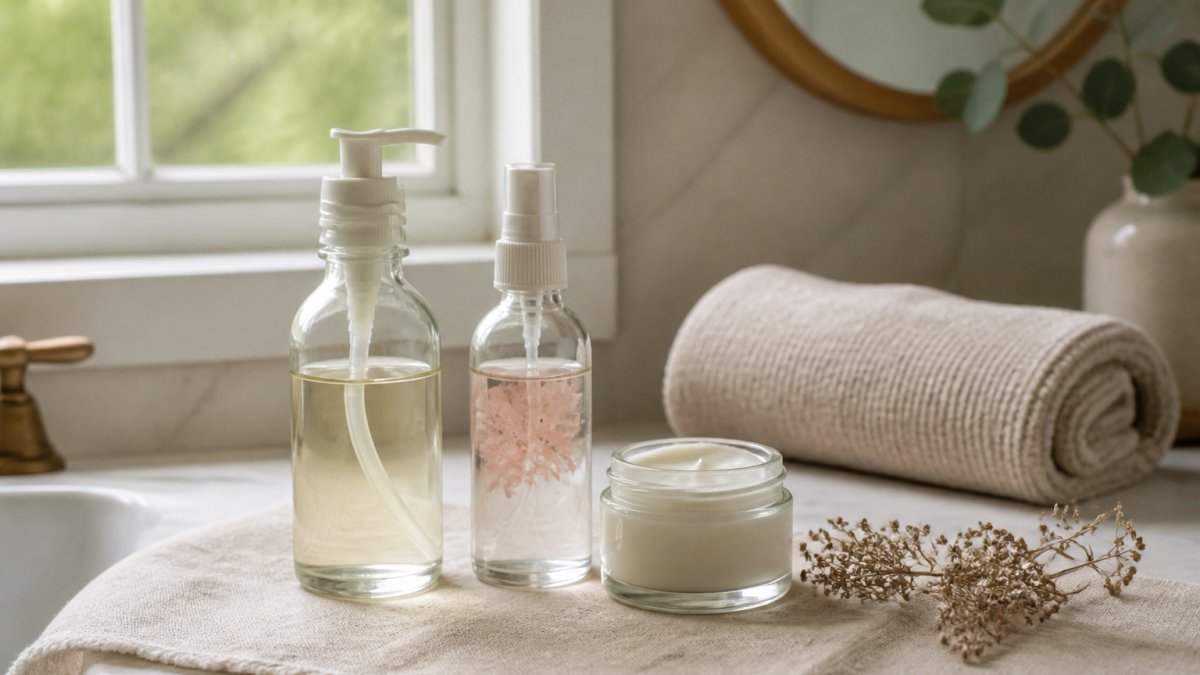
A simple three-step morning and evening rhythm
- Cleanse gently. Lukewarm water, a soft cloth or your fingertips, and a essential oils for scent and are cleanser.
- Hydrate. Mist damp skin with a humectant-rich product like our Rosewater Mist so moisture has something to bind to.
- Moisturize. Seal it in with a richer cream. Our Aloe Vera + Calendula Cream is a rich, emollient option for very dry or sensitive-feeling skin, and our Sea Buckthorn Facial Cream pairs aloe, shea butter, and sea buckthorn for skin that wants deeper nourishment.
In the morning, add a mineral sunscreen as your final step. At night, that is your whole routine.


Why the order matters
Each step prepares your skin for the next. Cleansing removes what your skin does not need. Hydrating on damp skin gives humectants water to pull into the surface layers. Moisturizing seals that water in with emollients and lipids so it does not evaporate. If you moisturize before misting, you are sealing in dryness instead of moisture. If you mist and wait too long, the water evaporates and you lose the benefit.
How to introduce a new product without a flare
- Start with one product at a time. Use it for at least a week before adding anything else.
- Patch test first. Apply behind the ear or on the inner forearm and wait 24 to 48 hours.
- Introduce it at night. If a reaction happens, you will be at home and can wash it off.
- Keep the rest of your routine unchanged. That way, if something goes wrong, you know exactly what caused it.
- Stop at the first sign of irritation. Redness, stinging, itching, or swelling means the product is not for you right now.
Adjusting for seasons and environment
Reactive skin often behaves differently depending on the weather and where you spend your time.
- Winter and dry indoor heat. Switch to a richer moisturizer and consider a balm on rough or chafed patches. Our Rescue Balm is a concentrated option for weather-exposed areas.
- Summer and sun exposure. A mineral sunscreen becomes non-negotiable. Reapply every two hours when you are outside.
- Hard water or travel. A pre-mist of rosewater before cleansing can reduce the drying effect of mineral-heavy water.
When to keep it simple and when to seek help
A minimalist routine handles most everyday reactivity. If your skin is reacting to nearly everything, if reactions are severe or spreading, or if you see swelling, oozing, or blistering, stop all products and see a dermatologist. Reactive skin is manageable, but some patterns need a professional eye.
Ingredient Interactions, Environmental Stress, and the Emotional Side of Reactive Skin
Two products can be fine alone and irritating together. Retinoids, exfoliating acids, and vitamin C layered in the same routine are a common cause of flares, so space them out or leave them out entirely while your barrier recovers.
Less discussed is how much chronic reactivity wears on you. Planning around your skin, avoiding photographs, and dreading the next flare adds up.
Environmental Protection Agency information on indoor air quality
Frequently Asked Questions
What kind of skincare should I use for very reactive skin?
Reach for fewer products with short, recognizable ingredient lists. A gentle, irritant-free cleanser, a hydrating mist or serum, and a rich moisturizer like our Aloe Vera + Calendula Cream are often enough. Look for soothing agents such as aloe, calendula, and sea buckthorn, plus humectants like glycerin that support hydration binding. Skip exfoliating acids, strong essential oil blends, and anything with synthetic preservatives or added fragrance while your skin settles. Introduce one new product at a time so you can tell what helps and what does not.
How do I calm down reactive skin naturally?
Start by removing the irritant rather than adding more products. Pause actives and scrubs, cleanse with lukewarm water, and layer a essential oils for scent and are moisturizer while skin is still damp to reduce transepidermal water loss. Antioxidant-rich botanical oils such as sea buckthorn and rosehip help nourish the lipid barrier, and a hydrating mist can refresh skin midday without heaviness. If redness or stinging continues or worsens, stop the product and speak with a dermatologist, since persistent reactions can have causes beyond product choice.
Why does my skin react to almost every product I try?
A compromised skin barrier lets irritants reach deeper layers, so products that once felt fine can suddenly sting. Fragrance, essential oils, preservatives, and repeated actives are common culprits, and using several at once makes it hard to identify the trigger. Rebuild with a minimalist routine, patch test each new item on your inner forearm for a few days, and add products one at a time. Barrier health improves gradually, so give a simple routine a few weeks before judging results.
Are natural products always safe for reactive skin?
No. Plant-derived does not automatically mean hypoallergenic. Essential oils, botanical extracts, and some organic ingredients can still trigger sensitivity in certain people, which is why patch testing matters even with clean formulas. Choose products with fewer plant ingredients, favor unscented options when skin is flaring, and stop use if irritation develops. Natural skincare for reactive skin types works best when the formula is simple, pH balanced, and free of added fragrance rather than simply labeled natural.
Reactive skin asks for less, not more. If you are ready to simplify, start with one gentle step and build from there. Verefina makes facial care with 99-100% naturally derived ingredients, from our hydrating Rosewater Mist to our rich Sea Buckthorn Facial Cream, so you can build a short routine that supports your barrier without overwhelming it. Shop All and find the two or three products your skin actually wants.
