

Non Toxic Deodorant for Kids: Safe Picks for Tweens
Table of Contents
- Non Toxic Deodorant for Kids: A Parent's Guide
- Quick Comparison: Our Kid-Friendly Deodorant Picks
- When Can Kids Start Wearing Deodorant?
- Safe Deodorant Ingredients for Kids (and What to Skip)
- Kids Deodorant for Sensitive Skin: What to Look For
- Our Non Toxic Deodorant Picks, Reviewed
- Deodorant vs. Antiperspirant: Why the Difference Matters for Kids
- How to Help Your Child Apply Deodorant (and Avoid Irritation)
- Frequently Asked Questions
Last Updated: October 6, 2026
Non Toxic Deodorant for Kids: A Parent's Guide
If your tween comes home from practice smelling like a locker room, you are not imagining it. Body odor arrives with puberty, often earlier than parents expect, and it usually shows up right around the same time your child starts caring about how they smell.
The short answer: most children need deodorant somewhere between ages 8 and 12, when puberty hormones switch on the apocrine glands that produce odor. Deodorant is not the same as antiperspirant, and for kids, that distinction matters more than almost anything else on the label.
Quick Comparison: Our Kid-Friendly Deodorant Picks
Here is the fastest way to see how our three main options stack up for tweens and teens. Every one is aluminum-free and made with essential oils rather than synthetic fragrance.
| Product | Price | Strength | Best For | Texture |
|---|---|---|---|---|
| Magnesium Deodorant | $18.00 | Gentle, everyday | Tweens just starting out, sensitive skin | Smooth stick |
| Moisturizing Deodorant Cream | $18.00 | Extra strength | Busy teens, sports, long days | Soft cream |
| Magnesium Deodorant Sampler | $18.00 | Gentle, everyday | Kids who want to pick their own scent | 9 mini sticks |
If your child has never worn deodorant before, start with the magnesium stick. It is our gentlest formula and the easiest one to apply correctly.


When Can Kids Start Wearing Deodorant?
Most kids can start wearing deodorant when they notice consistent body odor, which typically begins between ages 8 and 12 as puberty approaches. There is no fixed age, and there is no harm in waiting until the smell actually shows up.
The signal is straightforward. Before puberty, sweat glands are mostly the eccrine type, which produce watery sweat that bacteria do not find especially interesting.
Some kids hit this stage at 8. Others are 13. Both are normal, and both are fine.
Signs Your Child Is Ready for Deodorant
- A noticeable smell in the underarms, even after a shower
- Clothes that hold odor in the armpits after washing
- Your child asking about deodorant because friends use it
- New interest in hygiene, showers, and personal care
- Visible sweat marks on shirts during normal activity
If two or three of these are true, it is time to shop.
When to Check In With a Pediatrician
Bring it up at a well visit if your child has body odor before age 8, if the odor is unusually strong or sudden, if it comes with weight changes, fatigue, or mood shifts, or if deodorant causes a rash that keeps returning. These can be normal variations, but they are worth a conversation rather than a guess. The American Academy of Pediatrics guidance on puberty and adolescent health is a good starting point for understanding what is typical.
Safe Deodorant Ingredients for Kids (and What to Skip)
A safe deodorant for kids manages odor with ingredients that will not irritate young skin. The best formulas rely on odor-neutralizing minerals, moisture-absorbing powders, and skin-softening oils rather than aluminum salts or synthetic fragrance.
Young underarm skin is thinner and more reactive than adult skin. That does not mean it needs a completely different category of product. It means the ingredient list should be short, purposeful, and free of the usual irritants.
Ingredients We Reach For
- Magnesium hydroxide, which neutralizes odor at the source rather than masking it
- Coconut oil, which helps break down odor-causing bacteria
- Arrowroot powder, a plant starch that absorbs moisture and keeps skin feeling dry
- Shea and cocoa butters, which soften skin in cream formulas
- Essential oils, used in small amounts for scent instead of synthetic fragrance
Our Magnesium Deodorant is built around exactly this list. It is low in baking soda, not baking-soda-free, so it stays gentle while still working.
Ingredients to Avoid on Young Skin
- Aluminum salts, which block sweat ducts and are designed for antiperspirants
- Synthetic fragrance, a common trigger for contact sensitivity
- Parabens, widely avoided in clean personal care
- High concentrations of baking soda, which can irritate reactive skin
- Alcohol-heavy formulas, which can sting freshly shaved or irritated underarms
Kids Deodorant for Sensitive Skin: What to Look For
For sensitive skin, the formula matters more than the marketing. Look for short ingredient lists, no synthetic fragrance, no aluminum, and a texture that glides on without dragging or stinging.
"Hypoallergenic" and "pediatrician-approved" appear on a lot of labels, and neither is a regulated guarantee. What actually helps is a patch test.
A few practical markers of a gentle formula:
- It goes on smoothly and dries within a minute or two
- It does not sting on freshly showered skin
- It does not leave a sticky or gritty residue
- It has a light scent rather than a strong perfume
Our magnesium formula was designed with reactive skin in mind. It is the one we suggest for kids who have reacted badly to other deodorants.
Our Non Toxic Deodorant Picks, Reviewed
Every option below is aluminum-free, made with essential oils, and formulated for comfort. Here is how we would choose between them.
Magnesium Deodorant: Gentle Everyday Odor Protection
This is our starting point for almost every tween. The Magnesium Deodorant uses magnesium to neutralize odor at the source, coconut oil to help break down odor-causing bacteria, and arrowroot powder to absorb moisture. It is low in baking soda, which keeps it comfortable on skin that has never worn deodorant before.
Pros:
- Gentle enough for first-time deodorant users
- Nine scent options, so kids can pick something they actually like
- Smooth stick application that is hard to get wrong
- Vegan and cruelty-free
Cons:
- Not our strongest formula for heavy sweat days
- Scent fades over the course of a long day, so reapplication may help
Best for: tweens just starting out, and any child with sensitive skin.
Moisturizing Deodorant Cream: Extra Strength for Busy Teens
When your teenager plays sports, works a summer job, or simply runs hot, the Moisturizing Deodorant Cream is the stronger choice. Baking soda works alongside coconut oil and arrowroot powder, while shea and cocoa butters keep the formula rich and moisturizing. It offers 24+ hour odor protection and comes in five essential-oil scents.
Pros:
- Our strongest odor protection
- Cream texture melts in and leaves skin soft
- A pea-sized amount per underarm is enough
- Aluminum-free, paraben-free, gluten-free, and vegan
Cons:
- Applied by hand, which takes a little practice
- Contains baking soda, so it is not the right pick for kids who react to it
Best for: teens with high-demand routines, and kids who have already tolerated baking soda well.
Sampler and Duo Options: Finding the Right Scent First
Scent is personal, and a deodorant your child dislikes will sit unused in a drawer. The Complete Magnesium Deodorant Sampler includes all nine scents in mini sizes, so they can test each one on their own skin before committing. If you already know two favorites are in play, the Fresh + Calm Duo pairs Grapefruit + Spearmint with Lemongrass + Lavender.

Pros:
- Lets kids choose their own scent instead of guessing
- Nine scents to test, including Citrus Burst and Eucalyptus + Mint
- A single sample is available if you want to try just one
Cons:
- Mini sizes are for testing, not long-term daily use
- Choosing takes a week or two of trial
Best for: first-time buyers and anyone unsure which scent will stick.
Deodorant vs. Antiperspirant: Why the Difference Matters for Kids
Deodorant manages odor. Antiperspirant stops sweat. That single difference is the reason we suggest deodorant for kids.
Antiperspirants work by using aluminum salts to temporarily block sweat ducts. That is effective for wetness, and it is a legitimate choice for many adults.
Our deodorants help manage odor and may absorb some moisture through arrowroot powder, but they do not stop perspiration. If your child's main complaint is wetness rather than smell, that is a different conversation, and one worth having with their pediatrician.
One more note: switching from an antiperspirant to a deodorant does not trigger a detox.
How to Help Your Child Apply Deodorant (and Avoid Irritation)
Good application prevents most irritation. The goal is a thin, even layer on dry skin, not a thick coating.
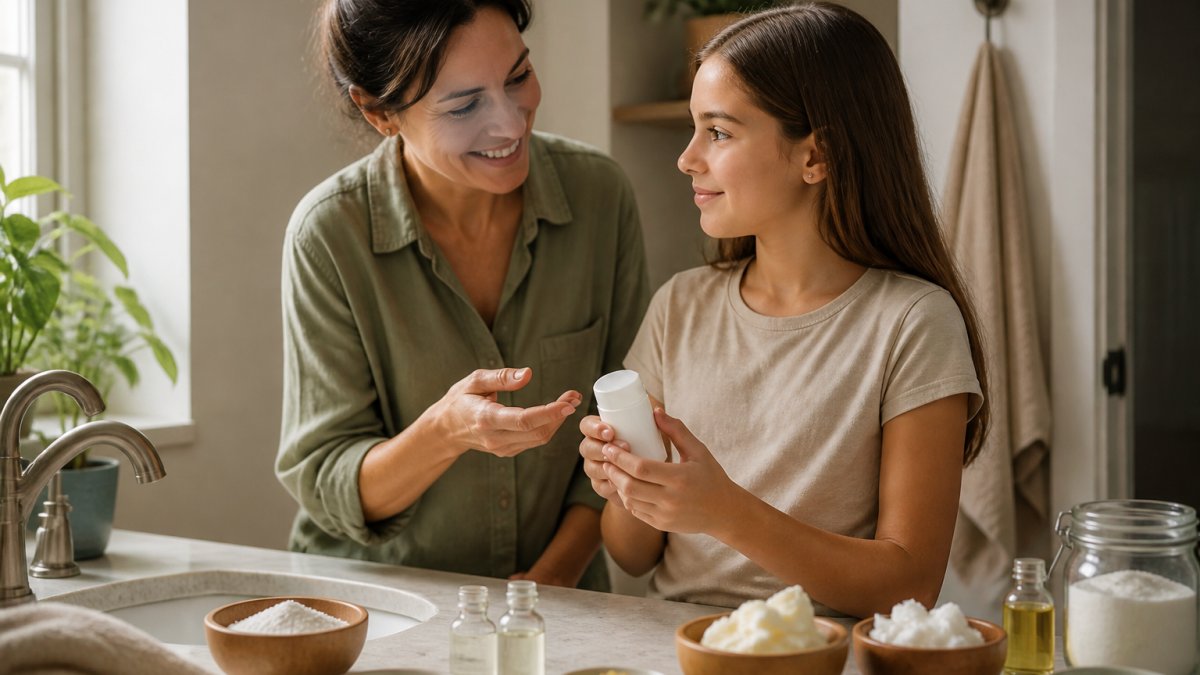
- Start with clean, dry skin. Apply after a shower, once the underarms are fully dry. Moisture dilutes the formula and encourages rubbing.
- Use less than you think. Two or three light swipes of a stick, or less than a pea-sized amount of cream, is enough for each underarm.
- Let it settle. Give it a minute before dressing so the formula has time to absorb.
- Reapply only if needed. On hot or active days, a second light application after lunch helps. More product does not mean more protection.
- Patch test first. Try a small amount on the inner forearm for a day before using it on the underarms.
- Stop if irritation appears. Redness, itching, or a rash means it is time to switch formulas, not to push through.
Finding a deodorant your child will actually use comes down to two things: a formula gentle enough for young skin and a scent they genuinely like. Start with the Magnesium Deodorant for everyday protection, or browse the full deodorant collection to find the right fit for your family.
Patch test before full use and discontinue if irritation occurs. Our deodorants manage odor and may absorb some moisture; they do not stop perspiration.
Frequently Asked Questions
What is the safest deodorant for children?
A gentle, aluminum-free deodorant with simple ingredients is a good starting point. Look for formulas built around magnesium hydroxide, arrowroot powder, and coconut oil, with essential oils for scent instead of synthetic fragrance. Low baking soda formulas are gentler on young skin than baking-soda-heavy ones. Always patch test on a small area first, and stop using the product if irritation develops.
Can my 7 year old start wearing deodorant?
Some children notice body odor around age 7 or 8, especially if they play sports or are early in puberty. If your child has consistent underarm odor after bathing, a gentle deodorant is reasonable. Start with a low baking soda, aluminum-free formula and apply a small amount to clean, dry skin. If odor seems unusually strong or comes with other puberty signs, check in with your pediatrician.
What ingredients should parents look for in deodorant for kids?
Look for magnesium hydroxide to help neutralize odor, arrowroot powder to absorb moisture, and coconut oil, which helps break down odor-causing bacteria. Essential oils provide scent without synthetic fragrance. Avoid aluminum, parabens, and heavy baking soda in products meant for young or reactive skin. A short, readable ingredient list is usually a good sign.
Is aluminum-free deodorant safe for children?
Aluminum-free deodorant is generally a comfortable choice for kids because it manages odor without blocking sweat glands. Our magnesium deodorants help manage odor and may absorb some moisture, but they do not stop perspiration. That makes them a gentle fit for tweens and teens who just need everyday freshness. Patch test first and discontinue if irritation occurs.
How can I help a child with underarm odor?
Start with daily bathing and a clean, dry shirt each day, since odor-causing bacteria thrive on damp skin. Have your child apply a small amount of gentle deodorant to clean, dry underarms after bathing. Keep a stick in their bag for reapplication after sports. If odor persists despite good hygiene, or if sweating seems excessive, ask your pediatrician.
