

Phthalates in Personal Care: What Are the Real Risks?
Last Updated: October 23, 2026
Quick Summary
The risks of phthalates in personal care center on hormone disruption and reproductive effects, since these compounds are classified as endocrine disruptors and are absorbed through skin or inhaled. The evidence is strongest in animal studies, mixed in human studies, and the FDA says it currently has no evidence that phthalates as used in cosmetics pose a safety risk.
- Phthalates often appear in personal care as fragrance fixatives, and US rules let labels list only fragrance or parfum.
- DEP is the phthalate most associated with fragrance use in personal care, and its evidence differs from DEHP's.
- Prioritize leave-on products you use daily and anything applied to large areas of skin.
- Fragrance-free is not the same as unscented, so read the full ingredient list.
- Patch test anything new and stop if irritation develops.
Table of Contents
- What phthalates are and why they show up in personal care
- How humans are exposed to phthalates (and why personal care matters)
- Health effects of phthalates: what the research actually shows
- Phthalates in fragrance: the hidden ingredient loophole
- How to avoid phthalates in personal care products
- Dose, risk, and what to prioritize first
- Frequently Asked Questions
What phthalates are and why they show up in personal care
Phthalates are a group of chemical compounds used to make plastics softer and to help fragrances last longer. In personal care, they most often appear as fragrance fixatives, which is why they turn up in products you would not expect.
That is the short answer to what are the risks of phthalates in personal care: the risk conversation starts with exposure, not with panic. At Verefina, we think the most useful thing we can do is explain where these compounds hide, what the research actually says, and how to make calmer choices.
Phthalates are not one chemical. They are a family, and different members behave differently. Some are restricted in certain uses; others are still common in consumer products. That distinction matters, and most guides skip it.
How humans are exposed to phthalates (and why personal care matters)
Exposure happens through food packaging, dust, flooring, medical devices, and personal care products. Cosmetics and skin care matter because you apply them directly to your skin, often daily, and often over large areas.
A 2025 review of exposure risks from phthalates in cosmetics and personal care products identifies hormonal disruption and reproductive effects as the main concerns discussed, though it offers no numerical estimates. That absence of numbers is itself informative: exposure assessment is hard, and researchers are careful about it.
Absorption through skin and inhalation
Skin absorption and inhalation are the two routes that matter most for personal care. Lotions, creams, and sprays sit on skin or enter the air you breathe. Neither route is automatically dangerous, but both are direct.
Health effects of phthalates: what the research actually shows
Here is where honesty helps more than alarm. The evidence is real, and it is also uneven. The most useful way to read it is to separate three questions: what was studied, in whom, and at what dose.
Not all phthalates carry the same evidence
Phthalates are a family, and the research does not treat them as interchangeable. A few distinctions are worth knowing:
- DEHP, DBP, and BBP are the compounds most studied for reproductive and developmental effects. They are the ones regulators have restricted most aggressively in certain uses, including some children's products and cosmetics in other markets.
- DEP (diethyl phthalate) is the one most often associated with fragrance fixative use in personal care. Its evidence profile is different from DEHP's, and that difference matters when you read headlines.
- DMP and DnBP appear in some consumer and industrial applications and have their own study histories.
When a study reports an association, the first question is which phthalate was measured. A finding about DEHP in medical tubing is not automatically a finding about DEP in a lotion.
Endocrine disruption and reproductive concerns
Phthalates are classified as endocrine disruptors, meaning they can interfere with hormone signaling. Reproductive toxicity and developmental toxicity are the two areas researchers watch most closely, particularly for exposure during pregnancy.
The mechanisms researchers describe include interference with androgen signaling and effects on thyroid hormone pathways. In animal studies, these show up as changes in reproductive development at certain doses. In human studies, the picture is observational: researchers measure phthalate metabolites in urine and look for statistical patterns in growth, birth weight, and developmental markers.
Where the evidence is strong, mixed, or still uncertain
- Stronger: animal studies consistently show reproductive and developmental effects at certain doses, and the mechanisms are biologically plausible.
- Mixed: human epidemiological evidence shows associations, but studies differ in design, population, and how exposure was measured. Some find effects; others do not.
- Uncertain: how much a given personal care routine contributes to total exposure, and how that compares with food, dust, and medical devices.
The FDA states it does not currently have evidence that phthalates as used in cosmetics pose a safety risk, according to the agency's phthalates in cosmetics page. That is a statement about the agency's evidence assessment, not a guarantee of harmlessness.
Why regulators and advocacy groups disagree
Different groups weigh the same evidence differently. Regulators tend to require demonstrated risk before restricting a use; advocacy groups tend to apply precaution when associations are consistent across studies. Neither approach is irrational. Knowing which lens a source is using helps you read it clearly.
If you want to reduce exposure without treating every label as a threat, our guide to clean beauty brands to trust walks through how to judge a brand's disclosure habits.
Phthalates in fragrance: the hidden ingredient loophole
Fragrance is the biggest practical blind spot. Under current US labeling rules, a product can list "fragrance" or "parfum" without disclosing the individual compounds inside that blend, and phthalates can be part of it (the FDA).
This is why ingredient labeling alone will not always tell you what you want to know. A short, readable label is a good signal, but it is not a complete one. When a brand lists its scent source plainly, for example as essential oils, that is a meaningful difference.
How to avoid phthalates in personal care products
You cannot eliminate exposure, and you do not need to try. What you can do is make a few informed choices that reduce the most likely sources without turning your routine into a research project.
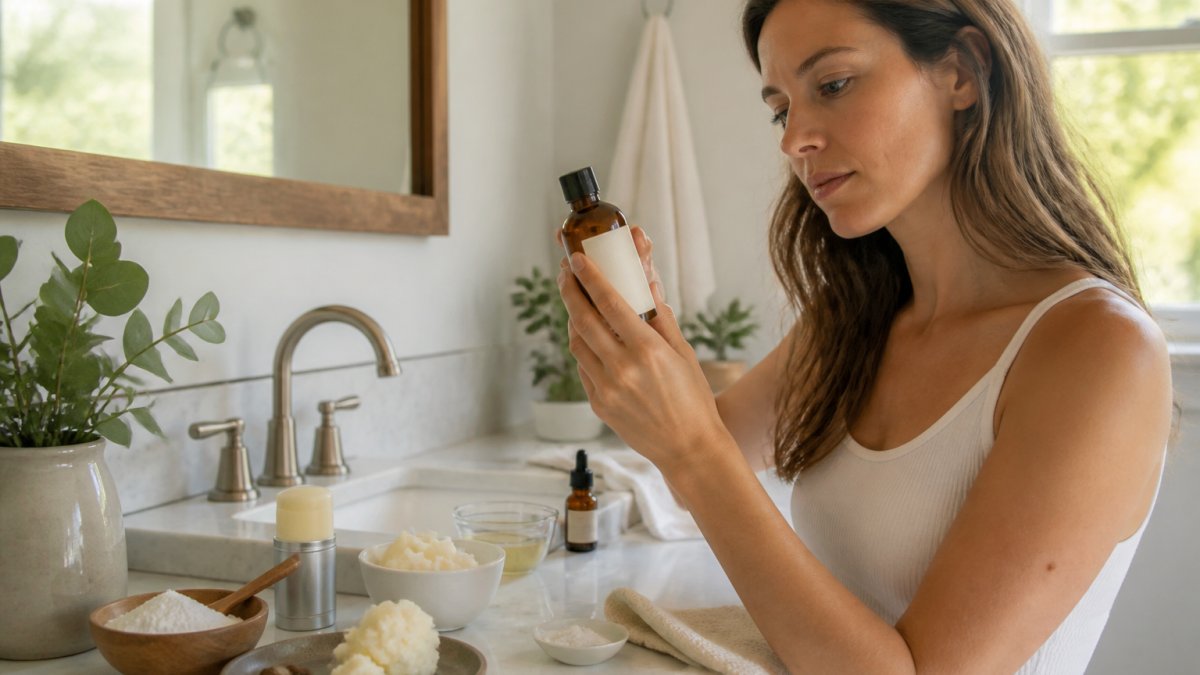
Start with the fragrance line
Fragrance is the biggest practical blind spot. Under current US labeling rules, a product can list "fragrance" or "parfum" without disclosing the individual compounds inside that blend, and phthalates can be part of it. That is the loophole to understand before you read any other part of the label.
A few practical signals:
- "Fragrance" or "parfum" with no further detail means the blend is undisclosed. That does not mean phthalates are present, but it means you cannot tell from the label.
- Named scent sources, such as essential oils or specific botanical extracts, tell you what is actually scenting the product.
- "Fragrance-free" is not the same as "unscented." A fragrance-free product may still contain masking fragrance. If scent disclosure matters to you, read the full ingredient list rather than the front of the package.
A simple label-checking routine
- Read the fragrance line first. If it says only "fragrance" or "parfum," note that you cannot verify what is inside.
- Look for named scent sources. Essential oils, botanical extracts, and named aroma compounds are more traceable than a generic blend.
- Prioritize leave-on products. Lotions, creams, and deodorants stay on your skin longer than cleansers, so they are the ones worth the closest look.
- Reduce the total number of products. Fewer products mean fewer opportunities for exposure and an easier routine to evaluate.
- Patch test anything new, and stop if irritation develops.
What to prioritize first
If you want to focus your effort, start with leave-on products you use daily and anything you apply to a large area of skin. Small, occasional uses matter far less. That is a proportionate approach, not a purge.
Our own approach is to keep formulas purposeful and scents traceable. Our aluminum-free magnesium deodorants use essential oils for scent, and they help manage odor and may absorb some moisture, though they do not stop perspiration. That is a deodorant, not an antiperspirant, and the distinction is worth knowing. If you are rebuilding a simpler routine, our deodorant collection is a calm place to start.
A simple label-checking routine helps you focus on the products that matter most.
| Step | What to do |
|---|---|
| 1 | Read the fragrance line first |
| 2 | Look for named scent sources |
| 3 | Prioritize leave-on products |
| 4 | Reduce the total number of products |
| 5 | Patch test anything new, stop if irritation develops |
Dose, risk, and what to prioritize first
Dose is the piece almost everyone skips. Risk depends on how much, how often, and by which route, not simply on whether a chemical appears on a label.
That is why we suggest prioritizing rather than purging. Focus first on leave-on products used daily, then on anything you apply to a large area of skin. Small, occasional uses matter far less.
Our own approach is to keep formulas purposeful and scents traceable. Our aluminum-free magnesium deodorants use essential oils for scent, and they help manage odor and may absorb some moisture, though they do not stop perspiration. That is a deodorant, not an antiperspirant, and the distinction is worth knowing.
Frequently Asked Questions
What are the potential health risks of phthalates in personal care products?
Research points to two main areas of concern: hormonal disruption and reproductive or developmental effects. A 2021 review indexed by the National Institutes of Health reports associations between phthalate exposure and adverse developmental outcomes, including reduced growth and birth weight. A 2025 review names hormonal disruption and reproductive effects as the main risks discussed for exposure from cosmetics and personal-care products. The FDA says it does not currently have evidence that phthalates as used in cosmetics pose a safety risk. That gap between the two positions reflects differences in how much weight each gives to animal and human studies.
Can phthalates be hidden under the word fragrance on an ingredient label?
Yes. Under current U.S. labeling rules, fragrance is treated as a single ingredient, so individual components of a scent blend do not have to be listed separately. Phthalates are sometimes used to help a scent last longer, which means they can sit inside that catch-all word. If you want to lower your exposure, look for products that list their scent sources directly, such as essential oils, or that state their fragrance is phthalate-free. Verefina deodorants use essential oils for scent and are not fragrance-free, so you always know where the smell comes from.
How can I reduce exposure to phthalates in personal care products?
Start with the products you use most often and leave on your skin longest, like lotion, deodorant, and facial care. Choose items with short, specific ingredient lists and scents you can identify. Check the fragrance question directly with a brand if it is not stated on the label. A 2025 review points to cosmetics and personal-care products as a meaningful exposure source, so swapping your daily essentials first gives you the most benefit per change. Patch test any new product and stop using it if irritation develops.
Are all phthalates linked to the same health concerns?
No. Phthalates are a family of chemical compounds with different structures and different uses, and research does not treat them as one substance. Some are used to make plastics flexible, others help scents last. A 2021 review reports associations between exposure and developmental outcomes, while the FDA states it does not currently have evidence that phthalates as used in cosmetics pose a safety risk. Those conclusions are not as far apart as they sound: one is about associations in the research, the other about the agency's current evidence assessment.
The honest challenge is that "clean" has no legal definition, so the work falls to you. Verefina tries to make that easier with 99-100% naturally derived ingredients, toxin-free formulations, and plain descriptions of what each product does. If you are ready to simplify your routine, shop our deodorants and skin care and start with one product rather than a full overhaul.

