

Why Choose Natural Toothpaste for Oral Health?
Last Updated: November 18, 2026
Quick Summary
Choosing natural toothpaste means picking a formula built around mineral and plant-based ingredients instead of synthetic detergents, artificial colors, and artificial flavors. Read the active ingredient line first, since natural toothpaste can be fluoride-free or contain fluoride from a mineral source, and match the paste to your own oral-health risk.
- Natural formulas lean on ingredients like nano-hydroxyapatite, coconut charcoal, and essential oils.
- Fluoride-free paste may freshen the mouth but does not offer the same protection against tooth decay.
- Give a new sensitivity formula two to three weeks before judging it.
- If you have had two or more cavities in recent years, talk with your dentist before switching.
- Patch test any new oral care product and stop if burning, swelling, or irritation develops.
Table of Contents
- What Natural Toothpaste Is and How It Differs From Conventional Formulas
- Natural Toothpaste Ingredients: What to Look For on the Label
- Fluoride-Free Toothpaste Benefits and Risks: An Honest Breakdown
- Natural Toothpaste for Sensitive Teeth: What Actually Helps
- The Pros and Cons of Choosing Natural Toothpaste
- Natural Doesn't Automatically Mean Non-Irritating
- How to Choose a Natural Toothpaste That Fits Your Routine
- Frequently Asked Questions
What Natural Toothpaste Is and How It Differs From Conventional Formulas
Natural toothpaste is an oral care formula built around mineral and plant-based ingredients instead of synthetic detergents, artificial colors, and artificial flavors. At Verefina, we think of it as a simpler daily ritual: fewer ingredients, clearly named, each with a job you can understand.
The biggest difference sits in the ingredient list. The American Dental Association's overview of toothpaste ingredients notes that toothpastes contain both active and inactive ingredients, and those actives vary widely from one formula to the next.
A Side-by-Side Look at Natural and Conventional Ingredients
| Ingredient Type | Conventional Toothpaste | Natural Toothpaste |
|---|---|---|
| Cleansing agent | Synthetic foaming detergents | Mineral and plant-based cleaners |
| Sweetener | Artificial sweeteners | Natural flavor oils |
| Whitening | Synthetic abrasives | Coconut charcoal, nano-hydroxyapatite |
| Flavor | Artificial flavoring | Peppermint, spearmint, clove oils |
| Preservatives | Synthetic preservatives | Minimal or none listed |
Neither column is automatically better. The table shows what changes, not what wins.
Natural Toothpaste Ingredients: What to Look For on the Label
Start with the actives, not the marketing words. A short, specific ingredient list tells you more than a "clean" badge ever will. Research in a 2022 review of chemical versus natural toothpaste formulas describes herbal toothpastes as containing components with antimicrobial, anti-inflammatory, or desensitizing properties, though the review does not promise those effects in every formula.
Common natural toothpaste ingredients to recognize:
- Nano-hydroxyapatite, a mineral used in sensitivity-focused formulas
- Coconut charcoal, included for whitening in some pastes
- Essential oils such as peppermint, spearmint, clove, and eucalyptus for flavor and freshness
- Plant-based abrasives for plaque removal
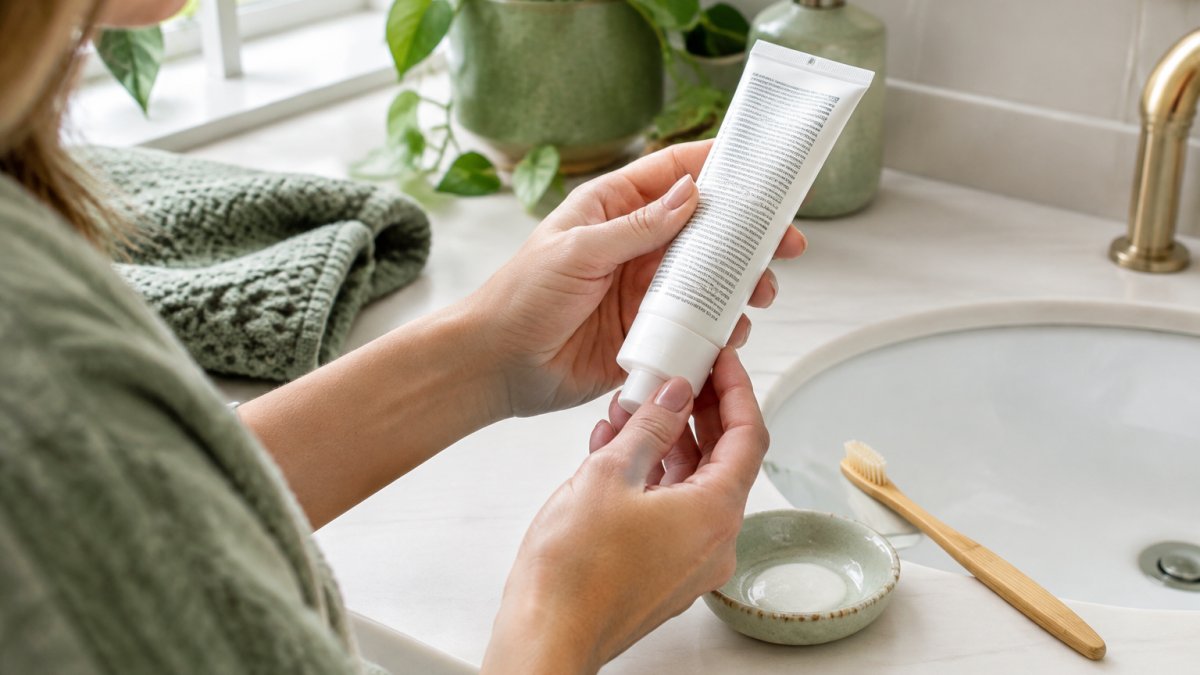
A Practical Ingredient-Label Checklist
Use this before you buy:
- Is the first listed active a mineral or plant ingredient you recognize?
- Are flavors named specifically, like peppermint oil, rather than "flavoring"?
- Does the tube state whether fluoride is included or left out?
- Are artificial colors and preservatives absent from the list?
- Does the brand explain what each active is there to do?
If you want a deeper walkthrough of decoding labels, our guide on how to read skincare ingredient labels uses the same step-by-step approach.
Fluoride-Free Toothpaste Benefits and Risks: An Honest Breakdown
Fluoride-free toothpaste is a real choice, not a loophole. The honest version is that it comes with a trade-off, and the trade-off depends on your mouth. Here is how to think it through instead of picking a side.
What fluoride actually does
Fluoride works in two ways. It helps enamel resist demineralization when acids from food and bacteria soften it, and it supports remineralization, the repair process that follows. The American Dental Association's guidance on fluoride describes this as a balance between mineral loss and mineral gain at the tooth surface.
A 2025 systematic review of oral health clinical practice guidelines describes fluoride's role in raising enamel's resistance to demineralization, and the World Health Organization's oral health guidance recommends brushing twice daily with fluoride toothpaste for cavity prevention. That is the baseline most dental professionals work from.
What fluoride-free formulas offer
- No fluoride for people who prefer to avoid it, including some who swallow toothpaste out of habit
- Gentler flavor profiles for mouths that find conventional mint overwhelming
- Formulas built around minerals like nano-hydroxyapatite, which some research describes as supporting remineralization
- A simpler ingredient list for people who react to synthetic detergents or artificial sweeteners
What they may not offer
Cavity protection at the same level. University of Utah Health's 2023 article on fluoride-free toothpaste notes that fluoride-free paste may freshen the mouth but does not provide the same benefit against tooth decay. That does not make every fluoride-free formula useless, it means the protection depends on what else is in the tube and on your own risk level.
Evidence quality by outcome
Not every claim about natural toothpaste carries the same weight. A practical way to read the evidence:
- Cavity prevention. Fluoride is the best-established option for cavity prevention. Mineral alternatives like nano-hydroxyapatite are an area of ongoing study, and fluoride is still widely treated as the reference standard for higher-risk mouths.
- Plaque control. Abrasives and surfactants do the mechanical work. Plant-based abrasives can help, but technique and brushing time matter more than the ingredient list.
- Gum inflammation. A 2022 review of chemical versus natural toothpaste formulas describes herbal components with antimicrobial and anti-inflammatory properties in principle. That is not the same as proven gum-disease treatment.
- Sensitivity. Desensitizing minerals have a reasonable evidence base for mild sensitivity. Severe or sudden sensitivity needs a dental visit, not a new tube.
- Breath freshness. Flavor oils and thorough brushing both help. Neither fixes an underlying cause like dry mouth or gum disease.
How to weigh the risk for your own mouth
A common pattern is that people with a clean history and routine checkups can experiment with fluoride-free formulas more safely than people with frequent cavities.
Watch out: "fluoride-free" and "natural" are not the same claim. A tube can be fluoride-free without being gentle, and it can be natural while still containing fluoride from a mineral source. Read the active ingredient line, not the front label.
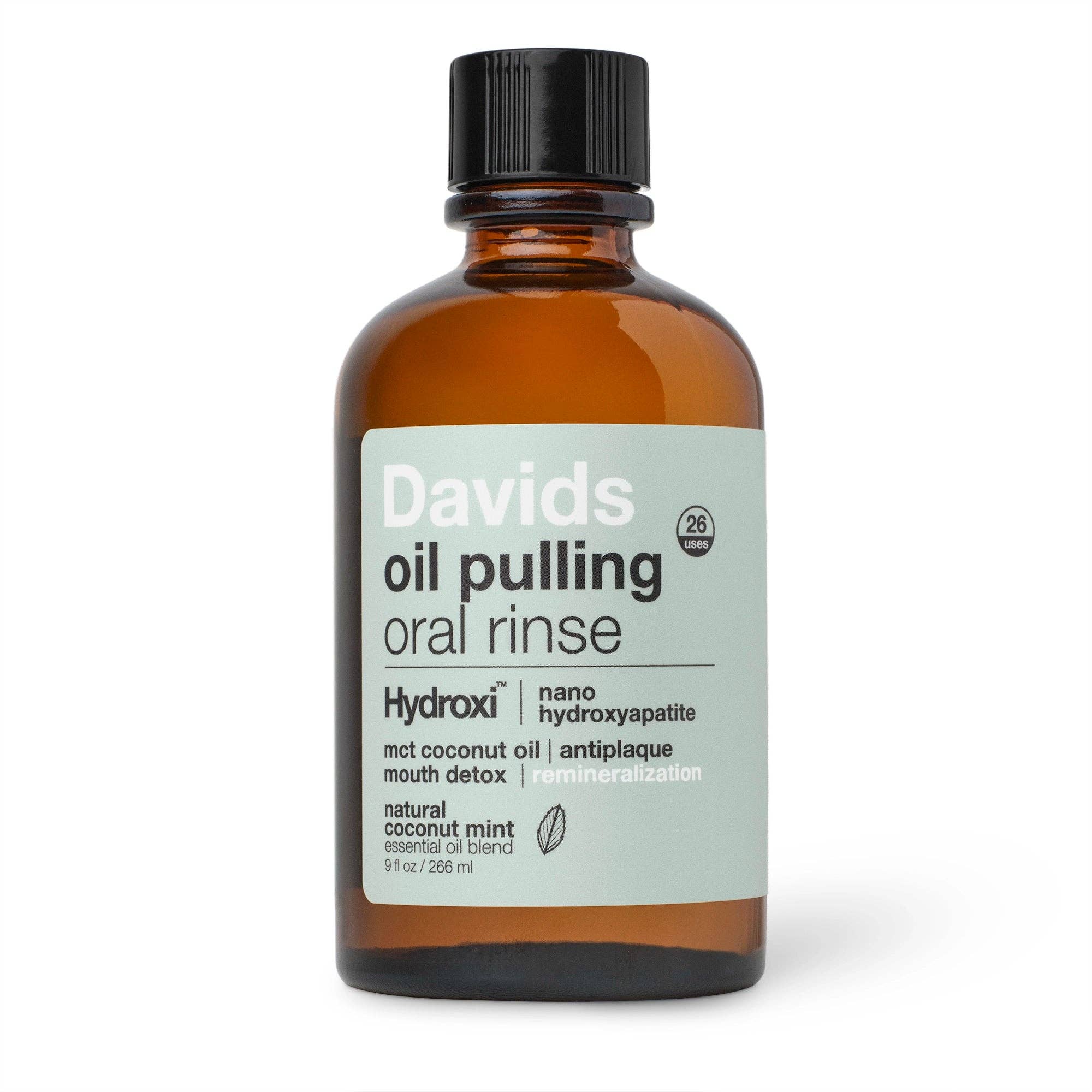
If you are building a fluoride-free routine and want to round it out, our Davids Hydroxi oil pulling oral rinse fits alongside a mineral-based paste.
Natural Toothpaste for Sensitive Teeth: What Actually Helps
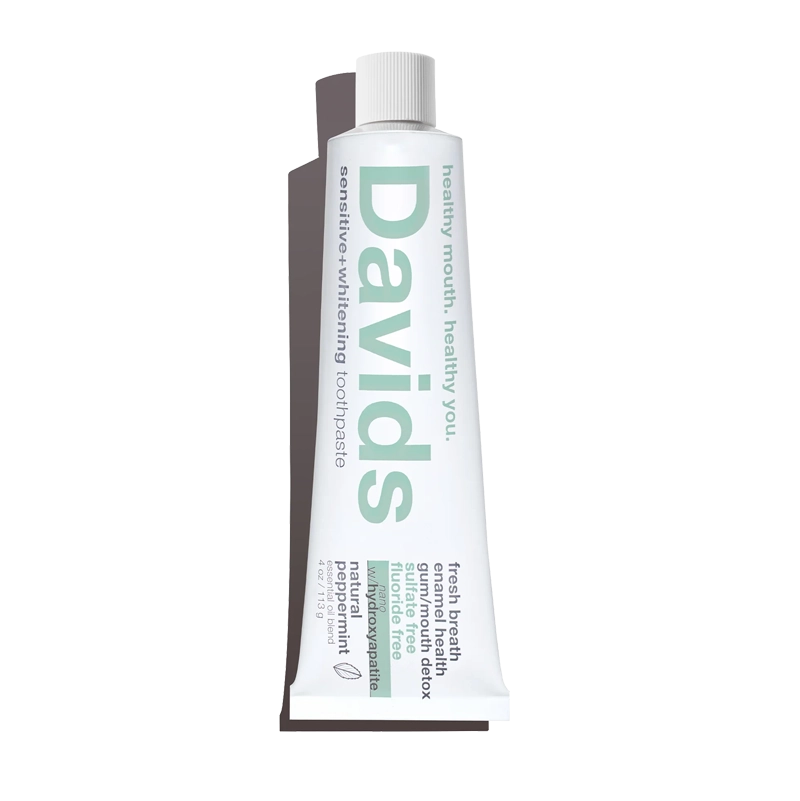
For sensitive teeth, look for a desensitizing mineral, not a stronger mint flavor. Nano-hydroxyapatite is an ingredient used in some sensitivity-focused formulas, and it appears in our Davids Sensitive+Whitening toothpaste with nano-hydroxyapatite. It is fluoride-free and made without SLS, artificial flavors, colors, or preservatives.
A few practical notes for sensitive teeth:
- Brush with soft bristles and light pressure
- Give a new formula two to three weeks before judging it
- Skip pastes with harsh abrasives if your gums feel raw
Watch out: a "natural" label does not mean a formula will feel gentle. Strong essential oils can sting reactive mouths, so start slowly.
The Pros and Cons of Choosing Natural Toothpaste
Natural toothpaste suits some routines beautifully and falls short in others. Here is the honest split.
Pros:
- Transparent, recognizable ingredient lists
- No artificial colors, flavors, or preservatives in many formulas
- Mineral options for sensitivity
- Recyclable metal packaging, including our Davids tubes
Cons:
-
Fluoride-free formulas may not protect against cavities as fully
-
Stronger natural flavors take adjustment
-
Prices often run higher than drugstore basics
If you want to round out a natural routine, a complementary rinse like our Davids Hydroxi oil pulling oral rinse fits alongside a fluoride-free paste.
Natural Doesn't Automatically Mean Non-Irritating
Plant-derived ingredients can still cause reactions. Essential oils, in particular, are potent, and a formula that feels lovely to one person can sting another. Herbal toothpaste actives are described as antimicrobial and anti-inflammatory in principle, not as universally gentle in practice.
Patch test any new oral care product before full use. If burning, swelling, or irritation develops, stop using it and check with a dental professional. This is especially true for children and anyone with a history of reactions to mint, clove, or eucalyptus oils.
How to Choose a Natural Toothpaste That Fits Your Routine
Match the paste to your mouth, not to a trend. Most guides stop at "sensitive" and "whitening." A more useful approach starts with your oral-health risk and works backward to the label.
Start with your risk profile
- Frequent cavities or a recent filling. This is the group where fluoride matters most. If you want a fluoride-free formula, ask your dentist first and consider whether a mineral-based paste plus fluoride treatments at checkups is a workable middle path.
- Dry mouth from medication, aging, or health conditions. Less saliva means less natural protection. Look for gentle, non-irritating formulas and talk with your dentist about whether fluoride is the safer choice.
- Sensitivity. Choose a nano-hydroxyapatite formula and give it two to three weeks before judging. If sensitivity is sharp or one-sided, see a dentist, that is a symptom, not a shopping problem.
- Braces or aligners. Plaque control matters more than flavor. Prioritize a paste you will actually use twice a day, and ask your orthodontist about fluoride.
- History of gum disease. Gum health is driven by brushing technique, flossing, and professional care. A natural paste can support a comfortable routine, but it does not replace periodontal treatment.
Then read the label like an editor
- Check the active ingredient line first. If it lists fluoride, the tube is not fluoride-free, whatever the front says.
- Look for named flavors, peppermint oil, spearmint oil, clove, rather than the word "flavoring."
- Note the abrasive. Fine mineral abrasives are comfortable for daily use; harsh ones can wear enamel over time.
- See whether the brand explains what each active is there to do. A short list with a clear job for each ingredient is easier to trust than a long list with a "clean" badge.
Age-specific notes
Children need supervision and a pea-sized amount regardless of which paste you choose. Swallowing is the main reason families consider fluoride-free options, and that is a conversation for a pediatric dentist rather than a label decision. For adults, the same logic applies in reverse: the older you are and the more medications you take, the more dry mouth and root sensitivity tend to matter.
A simple decision guide
- Sensitive teeth: choose a nano-hydroxyapatite formula
- Whitening focus: choose a charcoal or whitening formula, and expect gradual results
- Everyday freshness: choose a classic mint formula
- Travel: choose a TSA-friendly size
- Higher cavity risk: talk with your dentist before going fluoride-free
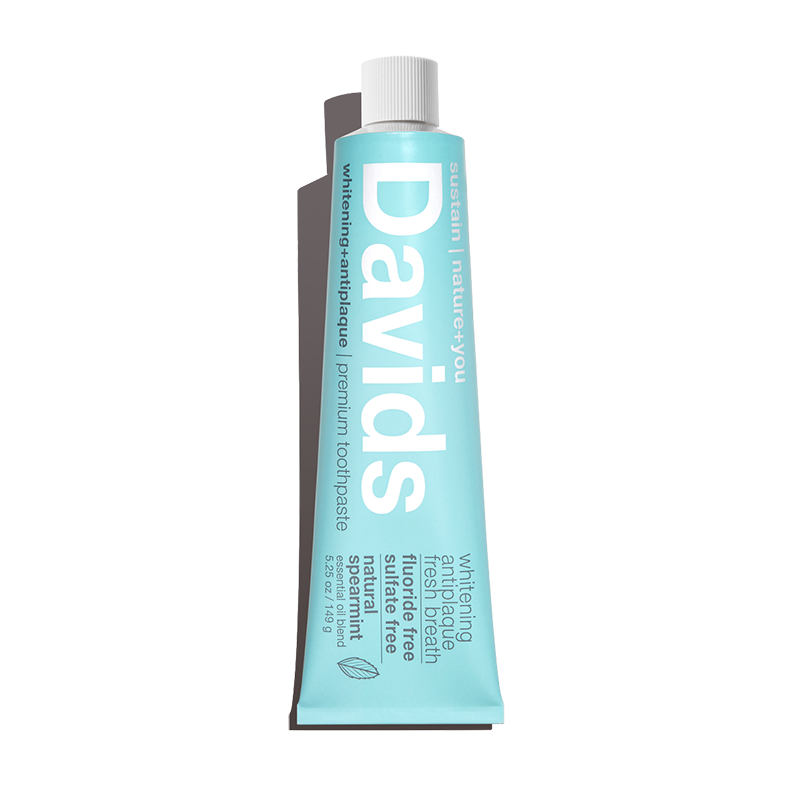
For a straightforward everyday pick, our Davids Premium spearmint toothpaste is fluoride-free and built for natural whitening, plaque removal, and fresh breath. It is $10.95, made without SLS or artificial flavors, and packed in a recyclable metal tube.
Whichever you choose, patch test a new oral care product before full use, and stop if burning, swelling, or irritation develops.
Choosing natural toothpaste is really a question of matching ingredients to your own oral health needs, not chasing a label.
Frequently Asked Questions
Is natural toothpaste better for your teeth?
Not automatically. Natural toothpaste can be a good fit if it contains ingredients that clean gently and support enamel, but the label matters more than the word natural. Some herbal toothpastes include antimicrobial, anti-inflammatory, or desensitizing components, though the same clinical effect is not confirmed for every formula. Fluoride toothpaste remains important for cavity prevention, so if you go fluoride-free, talk with your dentist about your cavity risk first.
Can natural toothpaste prevent cavities?
It depends on the formula. Fluoride toothpaste is described in clinical guidance as crucial for daily oral hygiene because it increases resistance to demineralization. Fluoride-free options may freshen breath and clean the mouth, but they may not provide the same benefit against tooth decay. If you choose a fluoride-free natural toothpaste, ask your dentist whether your risk level supports that choice, and keep up twice-daily brushing.
What should you look for in a natural toothpaste for sensitive teeth?
Look for a formula that names its desensitizing ingredient, such as nano-hydroxyapatite, and skips harsh additives like SLS if your mouth is easily irritated. Our Davids Sensitive + Whitening toothpaste pairs Hydroxi nano-hydroxyapatite with natural peppermint oil and is made without fluoride, SLS, artificial flavors, colors, or preservatives. Give any new formula a few weeks, and stop using it if sensitivity worsens or irritation develops.
Is fluoride-free toothpaste safe to use?
Fluoride-free toothpaste may help clean and freshen your mouth, but it may not protect against cavities as fully as fluoride toothpaste. Fluoride toothpaste is commonly recommended for brushing twice daily. If you prefer a fluoride-free formula, treat it as one part of your oral care and ask your dentist whether your cavity risk makes fluoride a better fit for you.

